
New Tennis Elbow Test: The Free Test
Reading time: 5 minutes
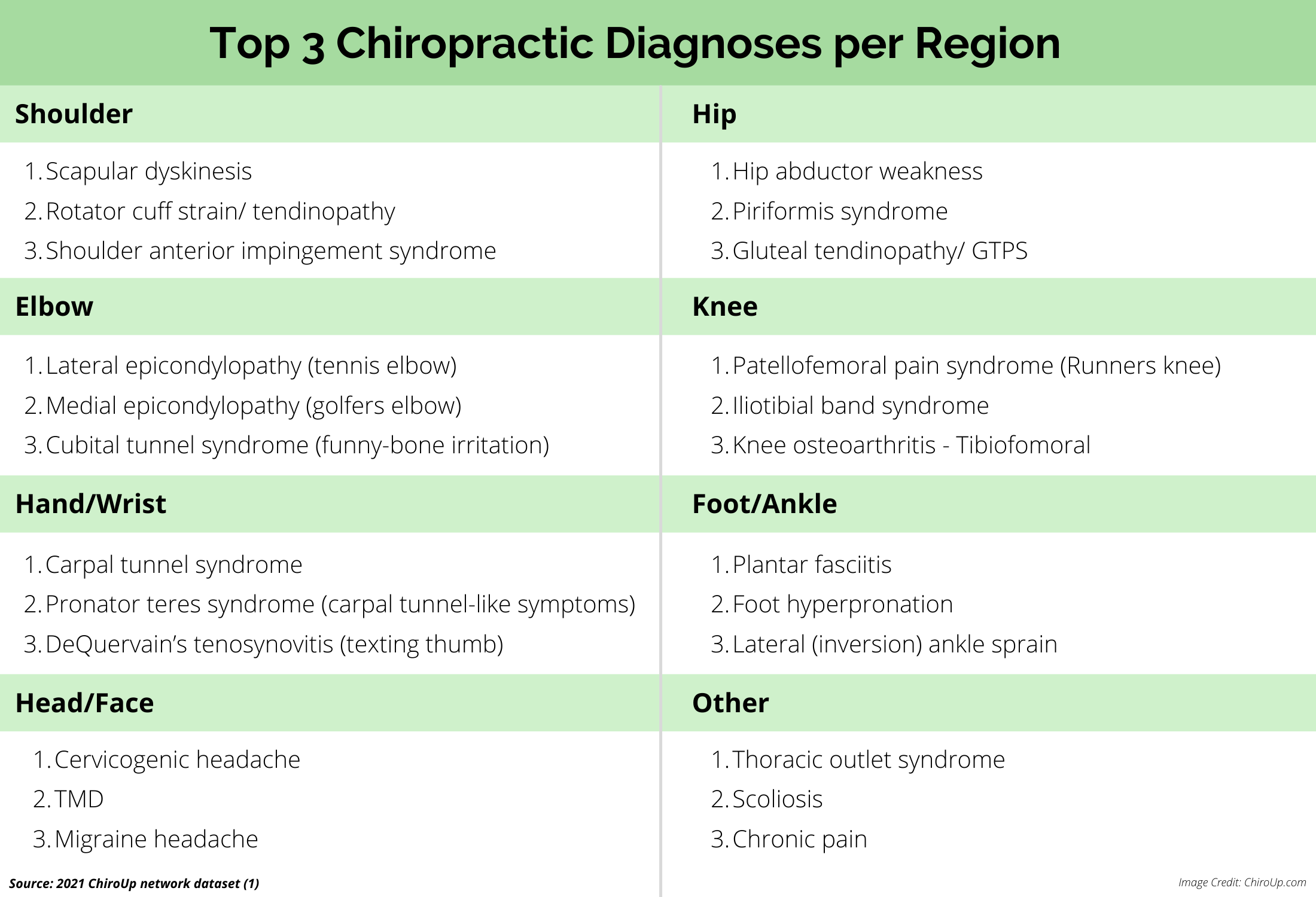
The ChiroUp Clinical Outcomes and Patient Satisfaction Synopsis (COPS) analyzed more than 630,000 presentations to find that lateral epicondylopathy, aka tennis elbow, is the most common elbow diagnosis.
So, to ensure you’re the go-to provider for tennis elbow, this blog will outline some essential skills for managing lateral epicondylopathy (LE), including:
A review of three time-tested lateral epicondylitis tests
A tutorial of the new Free Test that may help differentiate tendinosis vs tendonitis
Three manipulations and mobilizations that have “compelling evidence” for their effectiveness
1. What are the most useful lateral epicondylitis tests?
A 2018 BMJ systematic review (142) found the most widely used tests for lateral epicondylitis included:
Cozen’s test for lateral epicondylitis
Mills test lateral epicondylitis
Maudsley’s (aka Long finger extension) test

Cozen’s test

Mills test

Long finger extension test
2. Are existing lateral epicondylitis tests adequate?
A new Orthopedic Research and Reviews study (140) highlighted the potential deficiency of existing orthopedic tests for lateral epicondylitis:
“All of these physical maneuvers are positive in the presence of [any] lateral epicondylar pain. Nevertheless, cannot detect degenerative tendon changes, such as bone irregularities, calcific deposits, neovascularization, thickening, thinning, and tears.”
Essentially, these tests can identify if there is a problem with the wrist extensor tendon at the lateral epicondyle but cannot help to qualify the problem as inflammatory vs. degenerative.
3. Understanding tendinosis vs tendonitis
In recent years, lateral epicondylar pain has been subdivided into two categories:
Lateral epicondylitis or wrist extensor tendonitis develops from acute stress to the common extensor tendon, leading to painful inflammation. The main injury site is the extensor carpi radialis brevis tendon, located 1-2 cm below its attachment to the lateral epicondyle. (5,7,8)
Lateral epicondylosis or wrist extensor tendinosis (aka tendinopathy) is caused by chronic, repetitive micro-tearing of the common extensor tendon, resulting in failed healing, degeneration, and potential disruption. (5,6) Chronic cases show no histologic signs of inflammation. (9-12)
Researchers now understand that repetitive microtrauma interferes with the natural healing process, and instead of causing healthy inflammation, the result is a disorganized pathological degeneration of the tendon. (9,19, 12-16,144-146 ) The following chart outlines the progressive phases of chronic tendinopathy.

4. Why tendinopathy vs tendinitis matters
Differentiating tendonitis vs tendinopathy defines whether your management should focus on suppressing inflammation for acute elbow tendonitis presentations or, instead, generating a controlled inflammatory reaction for chronic elbow tendinopathy.

5. The new Free Test for lateral epicondylosis
Historically, MRI or diagnostic ultrasound were the only reliable options for defining the later stages of tendinopathy, including intrasubstance tears. Unfortunately, these advanced diagnostic tests are not cost-effective and time-efficient for many patients or providers.
However, a promising new maneuver, called the Free Test has been shown to “identify a specific intrasubstance tear of the common extensor tendon in patients with lateral epicondylopathy.” (140)
Free Test for Lateral Epicondylopathy
Begin with the seated patient’s shoulder slightly abducted, elbow flexed to 90 degrees, and fist facing down. The patient then performs maximal wrist extension against the clinician’s attempt to force an eccentric movement. Failure to resist extension due to painful weakness suggests intrasubstance tear of the common extensor tendon, aka lateral epicondylopathy.
ChiroUp subscribers can review the Free test tutorial here:

Free test
The Free Test showed 86% sensitivity and 64% specificity for intrasubstance tendon tears. Overall, the test’s accuracy was superior to a positive Cozen’s test or the presence of nocturnal pain. (140)
Editors note- Intrasubstance tendon tears were confirmed by diagnostic ultrasound; however, sensitivity and specificity statistics were based on a small study size of 41 patients.
6. Chronic tennis elbow treatment
So now that we can identify when someone is in the latter stages of tendinopathy, what can we do about it?
A hands-on FAKTR class would be an excellent first step for honing your tendinopathy management skills. Dr. Riddle and his crew are masters in teaching the most potent multimodal tools for musculoskeletal pain and injury management.
The essentials of chronic elbow tendinopathy treatment include:
Controlling stress load and limiting chronic compression
Progressive eccentric loading
Ergonomic, work, play, and sleep modifications
IASTM
Dry needling
Modalities like laser, galvanic, or shockwave therapy (ESWT)
Nutritional recommendations (including Tendisulfur ®) (148)
And, of course, elbow manipulation and mobilization
A 2019 systematic review in the Journal of Hand Therapy found “compelling evidence” that elbow mobilization and manipulation can significantly improve pain, grip strength, and functional outcomes in lateral epicondylopathy patients. (141)
The authors compared elbow Mobilization with Movement, Mill's Manipulation, and Regional Mobilizations for lateral elbow tendinosis treatment. The study found a mean effect of:
47% for Mill's manipulation on improving pain rating
Mill's manipulation did not improve pain-free grip strength
43% for Mobilization with Movement on improving pain rating
31% for Mobilization with Movement on improving grip strength
Need a refresher? Watch the following video that demonstrates three potent tennis elbow mobilization and tennis elbow manipulation skills.
“The healing time for tendinitis is several days to 6 weeks…Treatment for tendinosis recognized at an early stage can be as brief as 6–10 weeks; however, treatment once the tendinosis has become chronic can take 3–6 months.” (147)
7. How do you prescribe the best lateral epicondylosis exercises & ADL recommendations?
We made this one crazy simple. Watch this 1-minute video to learn how to make completely customizable reports like this in 4 clicks for more than 100 diagnoses.
Like what you see? You can create reports like these for your patients in less than four clicks!
-
1. Bigorre N, Raimbeau G, Fouque PA, Saint Cast Y, Rabarin F, Cesari B. Lateral epicondylitis treatment by extensor carpi radialis fasciotomy and radial nerve decompression: Is outcome influenced by the occupational disease compensation aspect?. Orthopaedics & Traumatology: Surgery & Research. 2011 Apr 1;97(2):159-63. Link
2. Bisset L, Beller E, Jull G, Brooks P, Darnell R, Vicenzino B. Mobilisation with movement and exercise, corticosteroid injection, or wait and see for tennis elbow: randomised trial. Bmj. 2006 Nov 2;333(7575):939. Link
3. Erak S, Day R, Wang A. The role of supinator in the pathogenesis of chronic lateral elbow pain: a biomechanical study. Journal of Hand Surgery. 2004 Oct;29(5):461-4. Link
4. Altan L, Kanat E. Conservative treatment of lateral epicondylitis: comparison of two different orthotic devices. Clinical rheumatology. 2008 Aug 1;27(8):1015-9. Link
5. Walz DM, Newman JS, Konin GP, Ross G. Epicondylitis: pathogenesis, imaging, and treatment. Radiographics. 2010 Jan;30(1):167-84. Link
6. Conway JE. Clinical evaluation of elbow injuries in the athlete. Journal of Musculoskeletal Medicine. 1998;15(10):43–52.
7. Rettig AC. Elbow, forearm and wrist injuries in the athlete. Sports Medicine. 1998 Feb 1;25(2):115-30. Link
8. Khan KM, Cook JL, Kannus P, Maffulli N, Bonar SF. Time to abandon the “tendinitis” myth: painful, overuse tendon conditions have a non-inflammatory pathology. Link
9. Boyer MI. Lateral tennis elbow:" Is there any science out there?". Journal of Shoulder and Elbow Surgery. 1999;8(5):481-91. Link
10. Regan W, Wold LE, Coonrad R, Morrey BF. Microscopic histopathology of chronic refractory lateral epicondylitis. The American journal of sports medicine. 1992 Nov;20(6):746-9. Link
11. Kraushaar BS, Nirschl RP. Tendinosis of the elbow (tennis elbow): clinical features and findings of histological, immunohistochemical, and electron microscopy studies. Journal of Bone and Joint Surgery. 1999 Feb 1;81(2):259. Link
12. Ollivere CO, Nirschl RP. Tennis elbow: current concepts and rehabilitation. Sports Med. 1996;22(2):133-9.
14. Nirschl RP. Elbow tendinosis/tennis elbow. Clinics in sports medicine. 1992 Oct;11(4):851-70. Link
15. Bishai SK, Plancher KD. The basic science of lateral epicondylosis: update for the future. Techniques in Orthopaedics. 2006 Dec 1;21(4):250-5. Link
16. Khan KM, Cook JL, Taunton JE, Bonar F. Overuse tendinosis, not tendinitis: part 1: a new paradigm for a difficult clinical problem. The Physician and sportsmedicine. 2000 May 1;28(5):38-48. Link
17. Hong QN, Durand MJ, Loisel P. Treatment of lateral epicondylitis: where is the evidence?. Joint Bone Spine. 2004 Sep 1;71(5):369-73. Link
18. Ollivere CO, Nirschl RP. Tennis elbow: current concepts and rehabilitation. Sports Med. 1996;22(2):133-9.
19. Verhaar JA. Tennis elbow. Anatomical, epidemiological and therapeutic aspects. Int Orthop. Oct 1994;18(5):263-267.
20. Haahr JP, Andersen JH. Physical and psychosocial risk factors for lateral epicondylitis: a population based case-referent study. Occupational and environmental medicine. 2003 May 1;60(5):322-9. Link
21. Bernard BP, Putz-Anderson V. Musculoskeletal disorders and workplace factors; a critical review of epidemiologic evidence for work-related musculoskeletal disorders of the neck, upper extremity, and low back. Link
22. Walrod BJ. Lateral Epicondylitis Clinical Presentation Emedicine. Accessed 04/29/2014 from http://emedicine.medscape.com/article/96969-clinical. Link
23. Loftice J, Fleisig GS, Zheng N, Andrews JR. Biomechanics of the elbow in sports. Clinics in sports medicine. 2004 Oct 1;23(4):519-30. Link
25. Calfee RP, Patel A, DaSilva MF, Akelman E. Management of lateral epicondylitis: current concepts. JAAOS-Journal of the American Academy of Orthopaedic Surgeons. 2008 Jan 1;16(1):19-29. Link
27. Rompe JD, Overend TJ, MacDermid JC. Validation of the patient-rated tennis elbow evaluation questionnaire. Journal of Hand Therapy. 2007 Jan 1;20(1):3-11. Link
28. Spinner M, Spinner RJ. Management of nerve compression lesions of the upper extremity. In: Management of Peripheral Nerve Problems, 2nd ed. 1998, Philadelphia, WB Saunders, pp. 501-533.
29. Lister GD, Belsole RB, Kleinert HE. The radial tunnel syndrome. Journal of Hand Surgery. 1979 Jan 1;4(1):52-9. Link
30. Hammer W. Is it Tennis Elbow or Radial Tunnel?. Dynamic Chiropractic. 1997 Dec 29;15(26).
31. Tyler TF, Thomas GC, Nicholas SJ, McHugh MP. Addition of isolated wrist extensor eccentric exercise to standard treatment for chronic lateral epicondylosis: a prospective randomized trial. Journal of Shoulder and Elbow surgery. 2010 Sep 1;19(6):917-22. Link
32. Miller TT, Reinus WR. Nerve entrapment syndromes of the elbow, forearm, and wrist. American Journal of Roentgenology. 2010 Sep;195(3):585-94. Link
33. Kirici Y, Irmak MK. Investigation of two possible compression sites of the deep branch of the radial nerve and nerve supply of the extensor carpi radialis brevis muscle. Neurologia medico-chirurgica. 2004;44(1):14-9. Link
34. Steinbach L, Dalinka M, Alazraki M. Chronic elbow pain. Reston, VA: American College of Radiology; 2001.
35. Calfee RP, Patel A, DaSilva MF, Akelman E. Management of lateral epicondylitis: current concepts. JAAOS-Journal of the American Academy of Orthopaedic Surgeons. 2008 Jan 1;16(1):19-29. Link
36. Janssen S, De Smet L. Responsiveness of the DASH questionnaire for surgically treated tennis elbow. Acta Chirurgica Belgica. 2008 Jan 1;108(5):583-5. Link
37. Assendelft WJ, Hay EM, Adshead R, Bouter LM. Corticosteroid injections for lateral epicondylitis: a systematic overview. Br J Gen Pract. 1996 Apr 1;46(405):209-16. Link
38. Pfefer MT, Cooper SR, Uhl NL. Chiropractic management of tendinopathy: a literature synthesis. Journal of manipulative and physiological therapeutics. 2009 Jan 1;32(1):41-52. Link
39. Waugh EJ, Jaglal SB, Davis AM, Tomlinson G, Verrier MC. Factors associated with prognosis of lateral epicondylitis after 8 weeks of physical therapy. Archives of physical medicine and rehabilitation. 2004 Feb 1;85(2):308-18. Link
40. Altan L, Kanat E. Conservative treatment of lateral epicondylitis: comparison of two different orthotic devices. Clinical rheumatology. 2008 Aug 1;27(8):1015-9. Link
41. Borkholder CD, Hill VA, Fess EE. The efficacy of splinting for lateral epicondylitis: a systematic review. Journal of Hand Therapy. 2004 Apr 1;17(2):181-99. Link
42. Jafarian FS, Demneh ES, Tyson SF. The immediate effect of orthotic management on grip strength of patients with lateral epicondylosis. journal of orthopaedic & sports physical therapy. 2009 Jun;39(6):484-9. Link
43. Calfee RP, Patel A, DaSilva MF, Akelman E. Management of lateral epicondylitis: current concepts. JAAOS-Journal of the American Academy of Orthopaedic Surgeons. 2008 Jan 1;16(1):19-29. Link
44. Souza TA. Differential diagnosis and management for the chiropractor: protocols and algorithms. Jones & Bartlett Publishers; 2009 Oct 7.
45. Bisset L, Paungmali A, Vicenzino B, Beller E. A systematic review and meta-analysis of clinical trials on physical interventions for lateral epicondylalgia. British journal of sports medicine. 2005 Jul 1;39(7):411-22. Link
46. Vicenzino B, Paungmali A, Buratowski S, Wright A. Specific manipulative therapy treatment for chronic lateral epicondylalgia produces uniquely characteristic hypoalgesia. Manual therapy. 2001 Nov 1;6(4):205-12. Link
47. Cleland JA, Flynn TW, Palmer JA. Incorporation of manual therapy directed at the cervicothoracic spine in patients with lateral epicondylalgia: a pilot clinical trial. Journal of manual & manipulative therapy. 2005 Jul 1;13(3):143-51. Link
48. Cleland JA, Whitman JM, Fritz JM. Effectiveness of manual physical therapy to the cervical spine in the management of lateral epicondylalgia: a retrospective analysis. Journal of Orthopaedic & Sports Physical Therapy. 2004 Nov;34(11):713-24. Link
49. Fernández-Carnero J, Fernández-de-las-Peñas C, Cleland JA. Immediate hypoalgesic and motor effects after a single cervical spine manipulation in subjects with lateral epicondylalgia. Journal of manipulative and physiological therapeutics. 2008 Nov 1;31(9):675-81. Link
50. Javier González-Iglesias, Joshua A. Cleland, Maria del Rosario Gutierrez-Vega, and Cesar Fernández-de-las-Peñas, Multimodal Management Of Lateral Epicondylalgia In Rock Climbers :A prospective Case Series J Manipulative Physiol Ther 2011;34:635-642.
51. Hammer WI. The effect of mechanical load on degenerated soft tissue. Journal of Bodywork and Movement Therapies. 2008 Jul 1;12(3):246-56. Link
52. Manchanda G, Grover D. Effectiveness of movement with mobilization compared with manipulation of wrist in case of lateral epicondylitis. Indian Journal of Physiotherapy and Occupational Therapy-An International Journal. 2008;2(1):16-25. Link
53. Struijs PA, Damen PJ, Bakker EW, Blankevoort L, Assendelft WJ, van Dijk CN. Manipulation of the wrist for management of lateral epicondylitis: a randomized pilot study. Physical therapy. 2003 Jul 1;83(7):608-16. Link
54. Nirschl RP. Elbow Tendonosis/Tennis elbow. Clin Sports Med. 1986;5: 638-644.
55. Cyriax J. Cyriax's Illustrated Manual of Orthopaedic Medicine. 2nd ed. Butterworth Heinemann: Oxford, UK; 1983.
56. Blanchette MA, Normand MC. Augmented soft tissue mobilization vs natural history in the treatment of lateral epicondylitis: a pilot study. Journal of manipulative and physiological therapeutics. 2011 Feb 1;34(2):123-30. Link
57. Stover S, Sevier T, Helfst R, Jansen CWS. The effectiveness of the ASTYM system in improving treatment outcomes in patients with lateral epicondylitis: a single-blinded randomized trial. Joint #1. Presented at the Joint Annual ASSH/ASHT Meeting. Sept. 22-24, 2005. San Antonio.
58. Langberg H, Ellingsgaard H, Madsen T, Jansson J, Magnusson SP, Aagaard P, Kjær M. Eccentric rehabilitation exercise increases peritendinous type I collagen synthesis in humans with Achilles tendinosis. Scandinavian journal of medicine & science in sports. 2007 Feb;17(1):61-6. Link
59. Paoloni JA, Appleyard RC, Nelson J, Murrell GA. Topical nitric oxide application in the treatment of chronic extensor tendinosis at the elbow. The American Journal of Sports Medicine. 2003 Nov;31(6):915-20. Link
60. Bisset L, Beller E, Jull G, Brooks P, Darnell R, Vicenzino B. Mobilisation with movement and exercise, corticosteroid injection, or wait and see for tennis elbow: randomised trial. Bmj. 2006 Nov 2;333(7575):939. Link
61. Connell DA, Ali KE, Ahmad M, Lambert S, Corbett S, Curtis M. Ultrasound-guided autologous blood injection for tennis elbow. Skeletal radiology. 2006 Jun 1;35(6):371-7. Link
64. PM&R Knowledge Now. Epicondylosis (lateral) with and without nerve entrapment. Accessed 5/12/14 from: aapmr.org Link
65. Bisset L, Beller E, Jull G, Brooks P, Darnell R, Vicenzino B. Mobilisation with movement and exercise, corticosteroid injection, or wait and see for tennis elbow: randomised trial. Bmj. 2006 Nov 2;333(7575):939. Link
66. Lin CL, Lee JS, Su WR, Kuo LC, Tai TW, Jou IM. Clinical and ultrasonographic results of ultrasonographically guided percutaneous radiofrequency lesioning in the treatment of recalcitrant lateral epicondylitis. The American journal of sports medicine. 2011 Nov;39(11):2429-35. Link
67. Baker Jr CL, Baker III CL. Long-term follow-up of arthroscopic treatment of lateral epicondylitis. The American journal of sports medicine. 2008 Feb;36(2):254-60. Link
68. Smidt N, Assendelft W, Arola H, Malmivaara A, Green S, Buchbinder R, van der Windt D, Bouter L. Effectiveness of physiotherapy for lateral epicondylitis: a systematic review. Annals of medicine. 2003 Jan 1;35(1):51-62. Link
69. Page P. A new exercise for tennis elbow that works. North American journal of sports physical therapy: NAJSPT. 2010 Sep;5(3):189. Link
70. Tyler TF, Thomas GC, Nicholas SJ, McHugh MP. Addition of isolated wrist extensor eccentric exercise to standard treatment for chronic lateral epicondylosis: a prospective randomized trial. Journal of Shoulder and Elbow surgery. 2010 Sep 1;19(6):917-22. Link
71. Piper S, Shearer HM, Cote P, Wong JJ, Yu H, Varatharajan S, Southerst D, Randhawa KA, Sutton DA, Stupar M, Nordin MC. The effectiveness of soft-tissue therapy for the management of musculoskeletal disorders and injuries of the upper and lower extremities: A systematic review by the Ontario Protocol for Traffic Injury management (OPTIMa) collaboration. Manual therapy. 2016 Feb 1;21:18-34. Link
72. Lucado AM, Dale RB, Vincent J, Day JM. Do joint mobilizations assist in the recovery of lateral elbow tendinopathy? A systematic review and meta-analysis. Journal of Hand Therapy. 2018 Apr 26. Link
73. Dedes V, Stergioulas A, Kipreos G, Dede AM, Mitseas A, Panoutsopoulos GI. Effectiveness and Safety of Shockwave Therapy in Tendinopathies. Materia socio-medica. 2018 Jun;30(2):131. Link
74. Seo JB, Yoon SH, Lee JY, Kim JK, Yoo JS. What is the most effective eccentric stretching position in lateral elbow tendinopathy?. Clinics in orthopedic surgery. 2018 Mar 1;10(1):47-54. Link
75. Richer N, Marchand AA, Descarreaux M. Management of chronic lateral epicondylitis with manual therapy and local cryostimulation: a pilot study. Journal of chiropractic medicine. 2017 Dec 1;16(4):279-88. Link
76. McShane JM, Nazarian LN, Harwood MI. Sonographically guided percutaneous needle tenotomy for treatment of common extensor tendinosis in the elbow. Journal of ultrasound in medicine. 2006 Oct;25(10):1281-9. Link
77. Cook JL, Purdam CR. The challenge of managing tendinopathy in competing athletes. Br J Sports Med. 2014 Apr 1;48(7):506-9. Link
78. Yi R, Bratchenko WW, Tan V. Deep friction massage versus steroid injection in the treatment of lateral epicondylitis. Hand. 2018 Jan;13(1):56-9. Link
79. Giray E, Karali-Bingul D, Akyuz G. The Effectiveness of Kinesiotaping, Sham Taping or Exercises Only in Lateral Epicondylitis Treatment: A Randomized Controlled Study. PM&R. 2019 Jan 4. Link
80. Park HB, Kam M, Gwark JY. Association of steroid injection with soft-tissue calcification in lateral epicondylitis. Journal of shoulder and elbow surgery. 2019 Feb 1;28(2):304-9. Link
81. Kroslak M, Pirapakaran K, Murrell GA. Counterforce bracing of lateral epicondylitis: a prospective, randomized, double-blinded, placebo-controlled clinical trial. Journal of shoulder and elbow surgery. 2019 Feb 1;28(2):288-95. Link
82. Yalvaç B, Mesci N, Külcü DG, Yurdakul OV. Comparison of ultrasound and extracorporeal shock wave therapy in lateral epicondylosis. Acta orthopaedica et traumatologica turcica. 2018 Sep 1;52(5):357-62. Link
83. Sethi K, Noohu MM. Scapular muscles strengthening on pain, functional outcome and muscle activity in chronic lateral epicondylalgia. Journal of Orthopaedic Science. 2018 Sep 1;23(5):777-82. Link
84. Yan C, Xiong Y, Chen L, Endo Y, Hu L, Liu M, Liu J, Xue H, Abududilibaier A, Mi B, Liu G. A comparative study of the efficacy of ultrasonics and extracorporeal shock wave in the treatment of tennis elbow: a meta-analysis of randomized controlled trials. Journal of orthopaedic surgery and research. 2019 Dec 1;14(1):248. Link
85. Cardoso TB, Pizzari T, Kinsella R, Hope D, Cook JL. Current trends in tendinopathy management. Best Practice & Research Clinical Rheumatology. 2019 Mar 8. Link
86. Gangatharam S. Anconeus syndrome: A potential cause for lateral elbow pain and its therapeutic management—A case report. Journal of Hand Therapy. 2019 Sep 3. Link
87. Kroslak M, Murrell GA. Surgical treatment of lateral epicondylitis: a prospective, randomized, double-blinded, placebo-controlled clinical trial. The American journal of sports medicine. 2018 Apr;46(5):1106-13. Link
88. Xu Q, Chen J, Cheng L. Comparison of platelet rich plasma and corticosteroids in the management of lateral epicondylitis: A meta-analysis of randomized controlled trials. International Journal of Surgery. 2019 May 22. Link
89. Barnett J, Bernacki MN, Kainer JL, Smith HN, Zaharoff AM, Subramanian SK. The effects of regenerative injection therapy compared to corticosteroids for the treatment of lateral Epicondylitis: a systematic review and meta-analysis. Archives of Physiotherapy. 2019 Dec 1;9(1):12. Link
90. Shakeri H, Soleimanifar M, Arab AM, Behbahani SH. The effects of KinesioTape on the treatment of lateral epicondylitis. Journal of Hand Therapy. 2018 Jan 1;31(1):35-41. Link
91. Brkljac M, Conville J, Sonar U, Kumar S. Long-term follow-up of platelet-rich plasma injections for refractory lateral epicondylitis. Journal of orthopaedics. 2019 Nov 1;16(6):496-9. Link
92. Bayat M, Raeissadat SA, Babaki MM, Rahimi-Dehgolan S. Is Dextrose Prolotherapy Superior To Corticosteroid Injection In Patients With Chronic Lateral Epicondylitis?: A Randomized Clinical Trial. Orthopedic Research and Reviews. 2019;11:167. Link
93. Huang K, Giddins G, Wu LD. Platelet-Rich Plasma Versus Corticosteroid Injections in the Management of Elbow Epicondylitis and Plantar Fasciitis: An Updated Systematic Review and Meta-analysis. The American Journal of Sports Medicine. 2019 Dec 10:0363546519888450. Link
94. Li A, Wang H, Yu Z, Zhang G, Feng S, Liu L, Gao Y. Platelet-rich plasma vs corticosteroids for elbow epicondylitis: A systematic review and meta-analysis. Medicine. 2019 Dec 1;98(51):e18358. Link
95. Kajita Y, Iwahori Y, Harada Y, Takahashi R, Deie M. Ultrasonographic analysis of the extensor carpi radialis brevis in asymptomatic individuals. Journal of Orthopaedic Science. 2020 Jan 3. Link
96. Kachanathu SJ, Alenazi AM, Hafez AR, Algarni AD, Alsubiheen AM. Comparison of the effects of short-duration wrist joint splinting combined with physical therapy and physical therapy alone on the management of patients with lateral epicondylitis. European journal of physical and rehabilitation medicine. 2019 Aug;55(4):488-93. Link
97. Xiong Y, Xue H, Zhou W, Sun Y, Liu Y, Wu Q, Liu J, Hu L, Panayi AC, Chen L, Yan C. Shock-wave therapy versus corticosteroid injection on lateral epicondylitis: a meta-analysis of randomized controlled trials. The Physician and Sportsmedicine. 2019 Jul 3;47(3):284-9. Link
98. Baktir S, Ozdincler AR, Mutlu EK, Bilsel K. The short-term effectiveness of low-level laser, phonophoresis, and iontophoresis in patients with lateral epicondylosis. Journal of Hand Therapy. 2018 Feb 13. Link
99. Koçak FA, Kurt EE, Sas S, Tuncay F, Erdem HR. Short-Term Effects of Steroid Injection, Kinesio Taping, or Both on Pain, Grip Strength, and Functionality of Patients With Lateral Epicondylitis: A Single-Blinded Randomized Controlled Trial. American journal of physical medicine & rehabilitation. 2019 Sep 1;98(9):751-8. Link
100. Peng Z, Zhang M, Li Y, Feng Z. Treatment of lateral epicondylitis with acupuncture and glucocorticoid: A retrospective cohort study. Medicine. 2020 Feb;99(8). Link
101. Zunke P, Auffarth A, Hitzl W, Moursy M. The effect of manual therapy to the thoracic spine on pain-free grip and sympathetic activity in patients with lateral epicondylalgia humeri. A randomized, sample sized planned, placebo-controlled, patient-blinded monocentric trial. BMC Musculoskeletal Disorders. 2020 Dec;21(1):1-1. Link
102. Zhong Y, Zheng C, Zheng J, Xu S. Kinesio tape reduces pain in patients with lateral epicondylitis: a meta-analysis of randomized controlled trials. International Journal of Surgery. 2020 Mar 10. Link
103. Gadau M, Zhang SP, Wang FC, Liguori S, Zaslawski C, Liu WH, Bangrazi S, Berle C, Razavy S, Bian ZX, Filomena P. A multi-center international study of Acupuncture for lateral elbow pain: Results of a randomized controlled trial. European Journal of Pain. 2020 Apr 17. Link
104. Lee SH, Gong HS, Kim S, Kim J, Baek GH. Is There a Relation Between Lateral Epicondylitis and Total Cholesterol Levels?. Arthroscopy: The Journal of Arthroscopic & Related Surgery. 2019 May 1;35(5):1379-84. Link
105. Dones III VC, Serra MA, Kamus III GO, Esteban Jr AC, Mercado AM, Rivera RG, Vergara AC, Francisco III RJ, De Ocampo LM, De Jesus PJ. The effectiveness of Biomechanical Taping Technique on visual analogue scale, static maximum handgrip strength, and Patient Rated Tennis Elbow Evaluation of patients with lateral epicondylalgia: A cross-over study. Journal of bodywork and movement therapies. 2019 Apr 1;23(2):405-16. Link
106. Chen Z, Baker NA. Effectiveness of eccentric strengthening in the treatment of lateral elbow tendinopathy: A systematic review with meta-analysis. Journal of Hand Therapy. 2020 Apr 11. Link
107. Linnanmäki L, Kanto K, Karjalainen T, Leppänen OV, Lehtinen J. Platelet-rich Plasma or Autologous Blood Do Not Reduce Pain or Improve Function in Patients with Lateral Epicondylitis: A Randomized Controlled Trial. Clinical Orthopaedics and Related Research®. 2020 May 12. Link
108. Heales LJ, McClintock SR, Maynard S, Lems CJ, Rose JA, George C, Kean CO, Obst S. Evaluating the immediate effect of forearm and wrist orthoses on pain and function in individuals with lateral elbow tendinopathy: A systematic review. Musculoskeletal Science and Practice. 2020 Mar 5:102147. Link
109. Pitts G, Uhl TL, Day JM. Grip strength is more sensitive to changes in elbow position than isolated wrist extension strength in patients with lateral elbow tendinopathy. Journal of Hand Therapy. 2020 Jun 18. Link
110. Shahabi S, Bagheri Lankarani K, Heydari ST, Jalali M, Ghahramani S, Kamyab M, Tabrizi R, Hosseinabadi M. The effects of counterforce brace on pain in subjects with lateral elbow tendinopathy: A systematic review and meta-analysis of randomized controlled trials. Prosthetics and Orthotics International. 2020 Jul 8:0309364620930618. Link
111. Irby A, Gutierrez J, Chamberlin C, Thomas SJ, Rosen AB. Clinical Management of Tendinopathy: A Systematic Review of Systematic Reviews Evaluating the Effectiveness of Tendinopathy Treatments. Scandinavian Journal of Medicine & Science in Sports. 2020 Jun 2. Link
112. Giray E, Karali?Bingul D, Akyuz G. The Effectiveness of Kinesiotaping, Sham Taping or Exercises Only in Lateral Epicondylitis Treatment: A Randomized Controlled Study. Pm&r. 2019 Jul;11(7):681-93. Link
113. Reyhan AC, Sindel D, Dereli EE. The effects of Mulligan’s mobilization with movement technique in patients with lateral epicondylitis. Journal of Back and Musculoskeletal Rehabilitation. 2020 Jan 1(Preprint):1-9. Link
114. Ahadi T, Esmaeili Jamkarani M, Raissi GR, Mansoori K, Emami Razavi SZ, Sajadi S. Prolotherapy vs radial extracorporeal shock wave therapy in the short-term treatment of lateral epicondylosis: a randomized clinical trial. Pain Medicine. 2019 Sep 1;20(9):1745-9. Link
115. UYGUR E, AKTA B, YILMAZOGLU EG. The use of dry needling versus corticosteroid injection to treat lateral epicondylitis: a prospective, randomized, controlled study. Journal of Shoulder and Elbow Surgery. 2020 Sep 17. Link
116. Mostafaee N, Divandari A, Negahban H, Kachooei AR, Moradi A, Ebrahimzadeh MH, Tabesh H, Daghiani M. Shoulder and scapula muscle training plus conventional physiotherapy versus conventional physiotherapy only: a randomized controlled trial of patients with lateral elbow tendinopathy. Physiotherapy Theory and Practice. 2020 Sep 26:1-2. Link
117. Kim YJ, Wood SM, Yoon AP, Howard JC, Yang LY, Chung KC. Efficacy of Nonoperative Treatments for Lateral Epicondylitis: A Systematic Review and Meta-Analysis. Plastic and Reconstructive Surgery. 2020 Sep 28. Link
118. Guler T, Yldrm P. Comparison of the efficacy of kinesiotaping and extracorporeal shock wave therapy in patients with newly diagnosed lateral epicondylitis: A prospective randomized trial. Nigerian Journal of Clinical Practice. 2020 May 18;23(5):704-10. Link
119. Zhou Y, Guo Y, Zhou R, Wu P, Liang F, Yang Z. Effectiveness of Acupuncture for Lateral Epicondylitis: A Systematic Review and Meta-Analysis of Randomized Controlled Trials. Pain Research and Management. 2020 Mar 20;2020. Link
120. McQueen KS, Powell RK, Keener T, Whalley R, Calfee RP. Role of Strengthening During Non-Operative Treatment of Lateral Epicondyle Tendinopathy. Journal of Hand Therapy. 2020 Oct 16. Link
121. Sayampanathan AA, Basha M, Mitra AK. Risk factors of lateral epicondylitis: A meta-analysis. The Surgeon. 2020 Apr 1;18(2):122-8. Link
122. Lucado AM, Dale RB, Kolber MJ, Day JM. Analysis Of Range Of Motion In Female Recreational Tennis Players With And Without Lateral Elbow Tendinopathy. International Journal of Sports Physical Therapy. 2020 Aug;15(4):526. Link
123. Zunke P, Auffarth A, Hitzl W, Moursy M. The effect of manual therapy to the thoracic spine on pain-free grip and sympathetic activity in patients with lateral epicondylalgia humeri. A randomized, sample sized planned, placebo-controlled, patient-blinded monocentric trial. BMC Musculoskeletal Disorders. 2020 Dec;21(1):1-1. Link
124. Turgay T, Karadeniz PG, Sever GB. Comparison of low level laser therapy and extracorporeal shock wave in treatment of chronic lateral epicondylitis. Acta orthopaedica et traumatologica turcica. 2020 Nov;54(6):591-5. Link
125. Ahmed A, Ibrar M, Arsh A, Wali S, Hayat S, Abass S. Comparing the effectiveness of Mulligan mobilization versus Cyriax approach in the management of patients with subacute lateral epicondylitis. Journal of the Pakistan Medical Association. 2020 Oct 15:1-1. Link
126. Defoort S, De Smet L, Brys P, Peers K, Degreef I. Lateral elbow tendinopathy: surgery versus extracorporeal shock wave therapy. Hand Surgery and Rehabilitation. 2021 Feb 23. Link
127. Navarro-Santana MJ, Sanchez-Infante J, Gómez-Chiguano GF, Cleland JA, López-de-Uralde-Villanueva I, Fernández-de-Las-Peñas C, Plaza-Manzano G. Effects of trigger point dry needling on lateral epicondylalgia of musculoskeletal origin: a systematic review and meta-analysis. Clinical Rehabilitation. 2020 Nov;34(11):1327-40. Link
128. Karanasios S, Tsamasiotis GK, Michopoulos K, Sakellari V, Gioftsos G. Clinical effectiveness of shockwave therapy in lateral elbow tendinopathy: systematic review and meta-analysis. Clinical Rehabilitation. 2021 Apr 4:02692155211006860. Link
129. Simental-Mendia M, Vilchez-Cavazos F, Alvarez-Villalobos N, Blazquez-Saldana J, Pena-Martinez V, Villarreal-Villarreal G, Acosta-Olivo C. Clinical efficacy of platelet-rich plasma in the treatment of lateral epicondylitis: a systematic review and meta-analysis of randomized placebo-controlled clinical trials. Clinical rheumatology. 2020 Aug;39(8):2255-65. Link
130. Güngör E, Karakuzu Güngör Z. Comparison of the efficacy of corticosteroid, dry needling, and PRP application in lateral epicondylitis. European Journal of Orthopaedic Surgery & Traumatology. 2021 Oct 6:1-7. Link
131. Navarro-Santana MJ, Sanchez-Infante J, Gómez-Chiguano GF, Cummings M, Fernández-de-Las-Peñas C, Plaza-Manzano G. Effects of manual acupuncture and electroacupuncture for lateral epicondylalgia of musculoskeletal origin: a systematic review and meta-analysis. Acupuncture in Medicine. 2021 Oct;39(5):405-22. Link
132. Liu WC, Chen CT, Lu CC, Tsai YC, Liu YC, Hsu CW, Shih CL, Chen PC, Fu YC. Extracorporeal Shock Wave Therapy shows Superiority over Injections for Pain Relief and Grip Strength Recovery in Lateral Epicondylitis: A Systematic Review and Network Meta-Analysis. Arthroscopy. Link
133. Schiffke-Juhász B, Knobloch K, Vogt PM, Hoy L. Proprioceptive elbow training reduces pain and improves function in painful lateral epicondylitis—a prospective trial. Journal of Orthopaedic Surgery and Research. 2021 Dec;16(1):1-3. Link
134. ?ahbaz T, Ceylan CM, Karacay BÇ, Korkmaz MD, D?raco?lu D. Comparison of platelet-rich plasma and extracorporeal shock wave therapy in patients with chronic lateral epicondylitis: A prospective, randomized-controlled study. Turkish Journal of Physical Medicine & Rehabilitation (2587-1250). 2021 Oct 1;67(4). Link
135. Klifto KM, Colbert SH, Richard MJ, Anakwenze OA, Ruch DS, Klifto CS. Platelet-Rich Plasma Versus Corticosteroid Injections for the Treatment of Recalcitrant Lateral Epicondylitis: A Cost-Effectiveness Markov Decision Analysis. Journal of Shoulder and Elbow Surgery. 2022 Jan 11. Link
136. Luo D, Liu B, Gao L, Fu S. The effect of ultrasound therapy on lateral epicondylitis: A meta-analysis. Medicine. 2022 Feb 25;101(8). Link
137. Stasinopoulos D. Stop Using the Eccentric Exercises as the Gold Standard Treatment for the Management of Lateral Elbow Tendinopathy. Journal of Clinical Medicine. 2022 Feb 28;11(5):1325. Link
138. Mansiz-Kaplan B, Pervane-Vural S, Celik OF, Genc H. Comparison of the effects of using non-steroidal anti-inflammatory drugs with or without kinesio taping on the radial nerve in lateral epicondylitis: A randomized-single blind study. EXPLORE. 2021 Jul 1;17(4):327-33. Link
139. Aldajah S, Alashram AR, Annino G, Romagnoli C, Padua E. Analgesic Effect of Extracorporeal Shock-Wave Therapy in Individuals with Lateral Epicondylitis: A Randomized Controlled Trial. Journal of Functional Morphology and Kinesiology. 2022 Mar 18;7(1):29. Link
140. Greene C, Droppelmann G, García N, Jorquera C, Verdugo A. A New Test for the Advanced Diagnosis of Lateral Elbow Tendinopathy with Concomitant Intrasubstance Tear: Failure to Resist Extension Effort (the Free Test). Orthopedic Research and Reviews. 2022 Dec 31:495-503. Link
141. Lucado AM, Dale RB, Vincent J, Day JM. Do joint mobilizations assist in the recovery of lateral elbow tendinopathy? A systematic review and meta-analysis. Journal of Hand Therapy. 2019 Apr 1;32(2):262-76. Link
142. Zwerus EL, Somford MP, Maissan F, Heisen J, Eygendaal D, Van Den Bekerom MP. Physical examination of the elbow, what is the evidence? A systematic literature review. British journal of sports medicine. 2018 Oct 1;52(19):1253-60. Link
143. Karanasios S, Korakakis V, Moutzouri M, Drakonaki E, Koci K, Pantazopoulou V, Tsepis E, Gioftsos G. Diagnostic accuracy of examination tests for lateral elbow tendinopathy (LET)–A systematic review. Journal of Hand Therapy. 2021 Feb 27. Link
144. Hodgson RJ, O'Connor PJ, Grainger AJ. Tendon and ligament imaging. The British journal of radiology. 2012 Aug;85(1016):1157-72. Link
145. Cook JL, Purdam CR. Is tendon pathology a continuum? A pathology model to explain the clinical presentation of load-induced tendinopathy. British journal of sports medicine. 2009 Jun 1;43(6):409-16. Link
146. Cook JL, Rio E, Purdam CR, Docking SI. Revisiting the continuum model of tendon pathology: what is its merit in clinical practice and research? British Journal of Sports Medicine. 2016;50:1187-91. Link
147. Bass E. Tendinopathy: why the difference between tendinitis and tendinosis matters. International journal of therapeutic massage & bodywork. 2012;5(1):14. Link
148. Qiu F, Li J, Legerlotz K. Does Additional Dietary Supplementation Improve Physiotherapeutic Treatment Outcome in Tendinopathy? A Systematic Review and Meta-Analysis. Journal of Clinical Medicine. 2022 Mar 17;11(6):1666. Link