
When we started building the ChiroUp chiropractic EHR, I thought we had a pretty good idea of what chiropractors needed from electronic health records software.
We were wrong.
The first 3,000 users taught us more about building a chiropractic electronic health record platform than I could have learned from any software roadmap, focus group, or conference-room strategy session.
Over the last 18 months, nearly every preconception we had about developing an EHR for chiropractors has been challenged. Features we thought would be essential were torn apart. Simple ideas became incredibly valuable. Workflows were created, tested, abandoned, rebuilt, and sometimes rebuilt again. And functionality we never imagined building became indispensable because a chiropractor somewhere said, "This is how this actually works in my practice." That's probably the biggest lesson of all:
You don't build great chiropractic EHR software for chiropractors. You build it with them.
Our development cycle has become remarkably simple:
Create → Listen → Iterate → Deploy → Repeat.
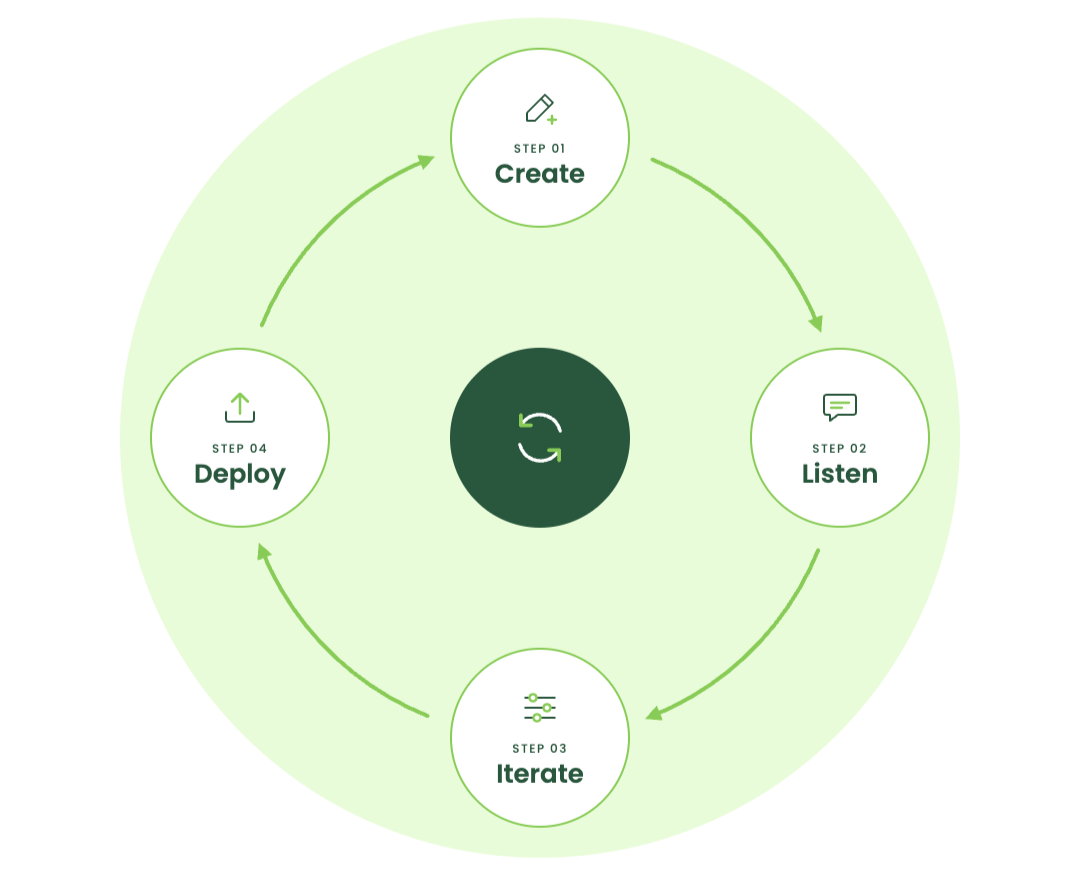
And there is no finish line.
Every piece of feedback teaches us something about how chiropractors document care, manage patients, bill insurance, schedule appointments, communicate with their teams, educate patients, and run their businesses. The goal isn't to build more features. It's to remove friction until the technology almost disappears into the clinical workflow.
We can't adequately express how grateful we are to the ChiroUp users who refuse to simply let us create in a vacuum. They question things. They find holes. They suggest better ways. They use features in ways we never anticipated. And occasionally, they help us realize that something we spent months building needs to be ripped apart and started over.
That's exactly how it should work.
So, after our first 3,000 ChiroUp EHR users, we wanted to stop and document what we've learned.
These are 10 of the most fascinating, unexpected, and occasionally humbling lessons we've learned while building an electronic health record system specifically for chiropractors.
Some changed individual features. Others changed the direction of the entire platform. And a few completely changed the way we think about what a chiropractic EHR should be.
ChiroUp EHR is an all-in-one chiropractic practice management and electronic health record platform built by chiropractors for chiropractors. It brings clinical documentation, AI-assisted SOAP notes, digital intake, scheduling, insurance verification, billing, payment processing, and patient communication into one connected system. Here's how feedback from our first 3,000 users helped shape the software chiropractors use today.
10 Lessons We Learned From Building ChiroUp EHR
1. How Team-Based Chiropractic Documentation Makes SOAP Notes Faster
One of the most important things we've learned is that chiropractic documentation doesn't have to be a solitary activity performed entirely by the doctor. A modern chiropractic EHR can allow multiple authorized team members to contribute to the same clinical record as care is delivered. Staff performing therapeutic exercises, modalities, shockwave therapy, or other delegated components of care can document those activities directly into the encounter while the chiropractor simultaneously completes the examination, assessment, and treatment plan.
Think of the chiropractic SOAP note like a shared Google Doc for the clinical encounter. Multiple authorized team members can contribute appropriate information in real time, while the treating chiropractor retains responsibility for reviewing the completed record and providing final approval before signing.
ChiroUp's collaborative SOAP note documentation allows the entire clinical team to contribute to one patient encounter without requiring the doctor to manually enter every treatment performed. This can reduce duplicate documentation and help ensure delegated services are recorded as part of the patient's care.
This seemingly small change fundamentally redefines the role of an EHR. Rather than merely a doctor's documentation tool, the chiropractic EHR becomes a clinic workflow tool.
The lesson from our first 3,000 users is simple: documentation can be a team sport, even though the doctor still has the final whistle.
2. How Fast Can Chiropractic Documentation Be?
We've repeatedly challenged ourselves with a simple goal: How can we make fast chiropractic documentation possible without sacrificing the quality of the clinical record? For an established patient, our target is roughly 30 seconds of doctor documentation, while a new-patient encounter should take only a few minutes.
The surprising lesson wasn't simply that chiropractic documentation could become faster; it was discovering that a better structure can make documentation both faster and more complete.
ChiroUp EHR helps chiropractors create SOAP notes faster by connecting information from previous visits, patient-reported outcomes, examination findings, and treatments within the clinical workflow. Instead of starting every note from scratch, chiropractors can review and update relevant information as the patient's episode of care progresses.
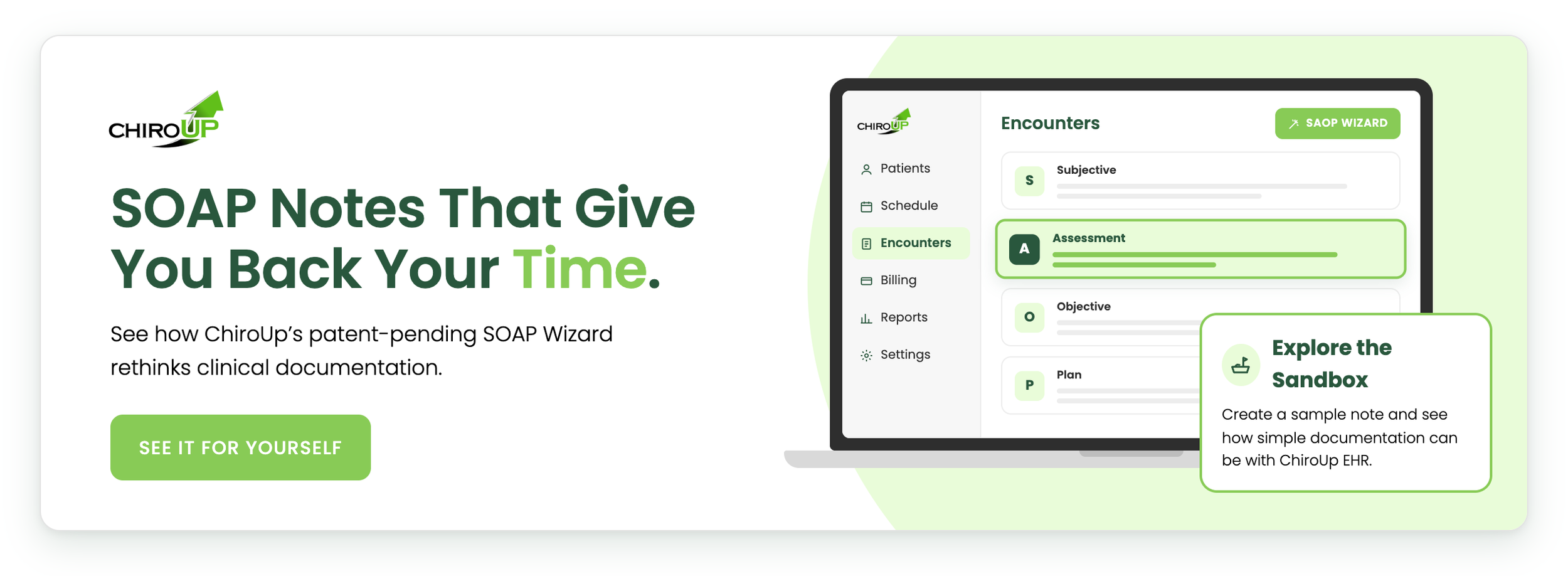
When yesterday's information, today's patient-reported changes, objective findings, treatments, and plan are intelligently connected, the chiropractor no longer has to rebuild the SOAP note from scratch at every visit. Instead, the documentation evolves with the patient's episode of care.
Now take that one step further: imagine your patient and staff helping build half of the note before you ever need to touch it. Patient-reported outcomes and disability surveys can pre-populate, staff can document delegated treatments and activities, and the chiropractor can focus on what actually requires clinical judgment.
That's the real opportunity behind fast chiropractic documentation. The goal isn't to type faster; it's to require less unnecessary typing in the first place.
3. How Digital Patient Intake Automates Chiropractic Documentation
One of the biggest opportunities for faster, more complete chiropractic documentation happens before the patient ever walks through the door.
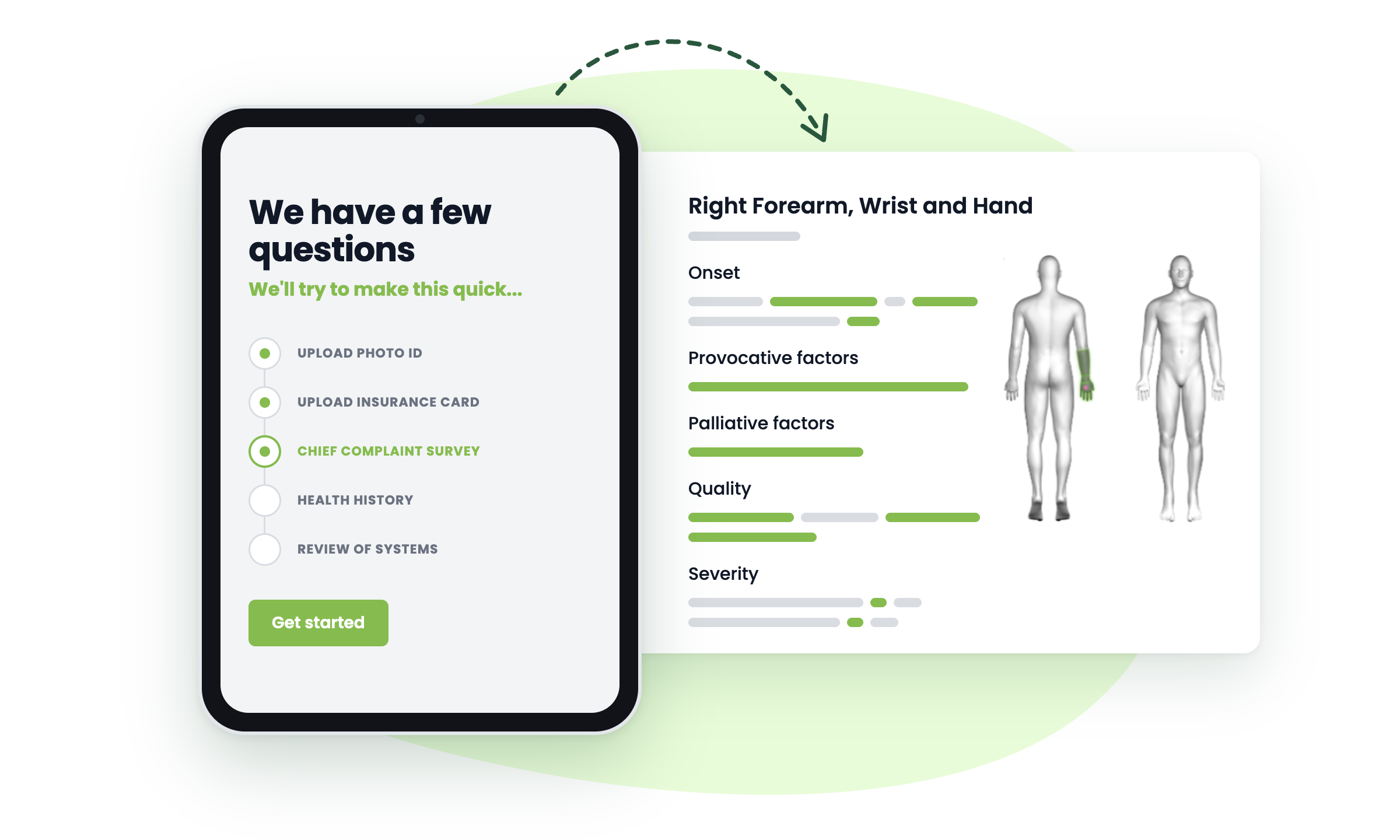
Patient-driven intake can collect demographics, insurance information, chief complaints, consent forms, financial-policy signatures, and functional disability information before the appointment. But the real breakthrough is turning that intake information into clinically useful chiropractic documentation.
When a patient identifies the location of their complaint on ChiroUp's body picker and answers the associated intake questions, ChiroUp can automatically select the most appropriate functional disability index or patient-reported outcome measure for the suspected condition. Instead of every patient receiving the same generic questionnaire, the intake process begins by organizing condition-specific clinical information before the chiropractor enters the examination room.
By connecting digital intake directly to ChiroUp's chiropractic SOAP note, practices can reduce repetitive data entry and begin the encounter with relevant patient information already organized in the chart.
The result is more than online paperwork. The patient actually begins building the chiropractic SOAP note. Great chiropractic documentation doesn't have to start with the doctor. It can start with the patient.
4. How AI Chiropractic Documentation Turns Conversations Into SOAP Notes
One of the most interesting lessons we've learned about chiropractic AI documentation is that the real opportunity isn't simply turning a doctor's voice into text. We know patients often go down a rabbit hole of information, and many times, there are other people in the room during the initial consultation.
Traditional AI transcription follows a predictable path: Doctor talks → AI transcribes → giant note appears.
But AI-assisted chiropractic documentation can be much more useful when the technology understands the clinical conversation rather than simply transcribing every word.
The better workflow is: Clinical conversation → relevant clinical information → structured patient chart.
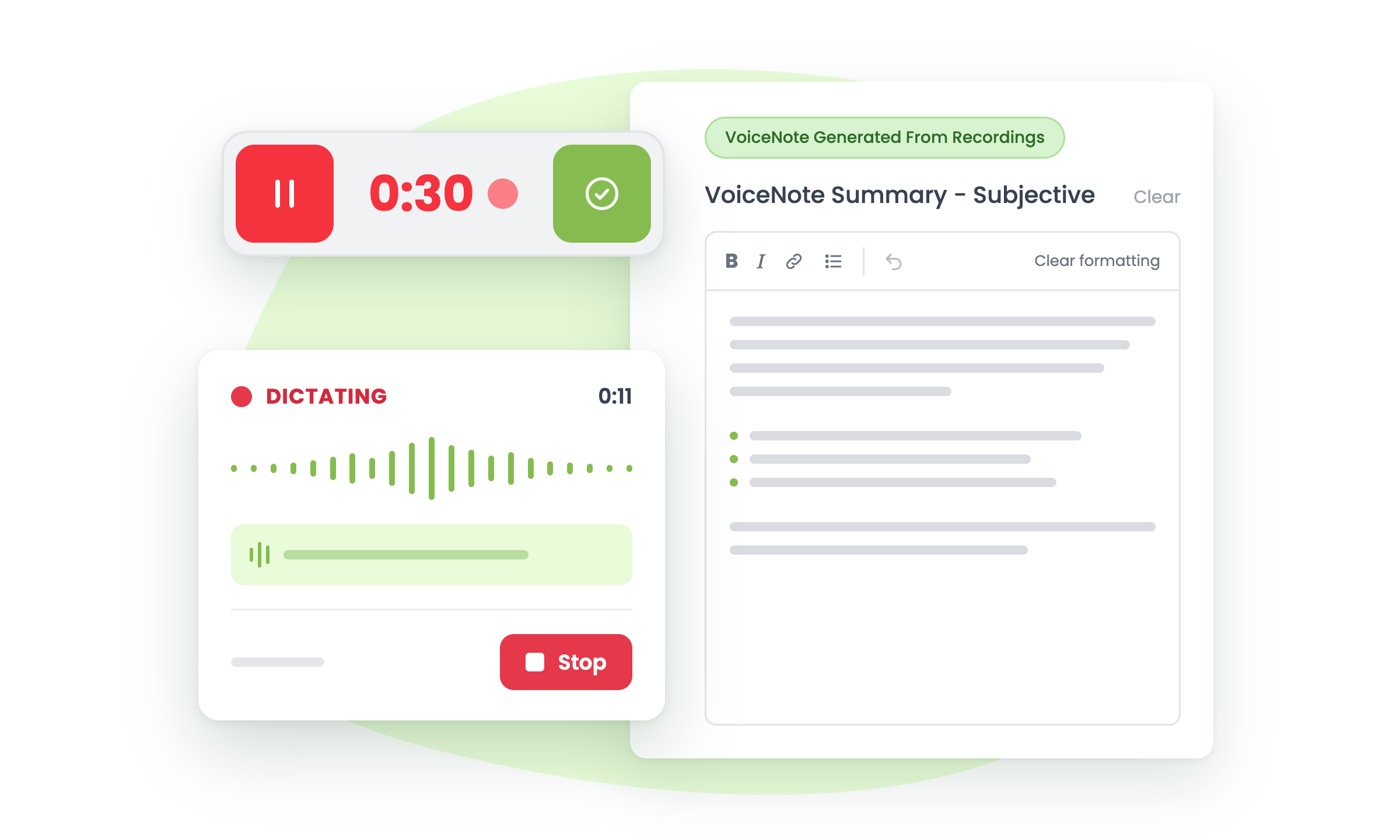
ChiroUp's AI-assisted voice documentation can listen to the natural conversation occurring during the patient encounter, distinguish between the chiropractor, patient, and other people in the room, and identify clinically relevant information such as symptoms, history, functional limitations, treatment discussions, and consent. That information can then be organized into a patient-specific subjective history rather than producing a wall of transcribed text.
The chiropractor still reviews and approves the final documentation, but the AI does much of the organizational work in the background. That's the distinction that matters. The future of chiropractic AI documentation isn't simply having AI hear more. It's having AI understand what belongs in the clinical record.
5. How Smarter ICD-10 Diagnosis Selection Improves Chiropractic Documentation and Billing
One of the sleeper features we've developed and patented at ChiroUp addresses a problem that is uniquely important to chiropractic documentation and compliance: ensuring the diagnosis, examination findings, treatment, SOAP note, and insurance claim tell the same clinical story.
Getting the diagnosis right isn't simply about placing the correct ICD-10 code in the patient's chart. ChiroUp can use the chiropractor's diagnosis selection to help structure several downstream documentation and billing decisions, including diagnosis ordering, claim mapping, and diagnosis pointers.
But the connection goes deeper.
Once a diagnosis is selected, ChiroUp can help identify the clinical information that would reasonably be expected to support that diagnosis, including:
Relevant orthopedic tests and examination findings
Muscles and anatomical structures associated with the condition
Appropriate regions for examination and treatment
Objective findings that should be considered for documentation
Diagnosis-to-procedure relationships are used when generating the claim
Importantly, this doesn't mean the software invents findings or assumes that a test was positive. The chiropractor still determines what was actually examined, found, diagnosed, and treated. The technology helps ensure those decisions are appropriately connected and documented.
That creates a more coherent path from examination → diagnosis → treatment → chiropractic SOAP note → insurance claim → integrated clearinghouse.
For chiropractic compliance, that continuity matters. Instead of asking the doctor or billing team to repeatedly reconstruct the relationship among the diagnosis, objective findings, treatment, and claim, ChiroUp EHR can carry the appropriate information forward throughout the workflow.
The best chiropractic documentation automation doesn't merely make decisions faster. It eliminates unnecessary decisions while preserving the clinical ones that belong to the chiropractor.
6. Automating Chiropractic Insurance Eligibility and Benefits Verification
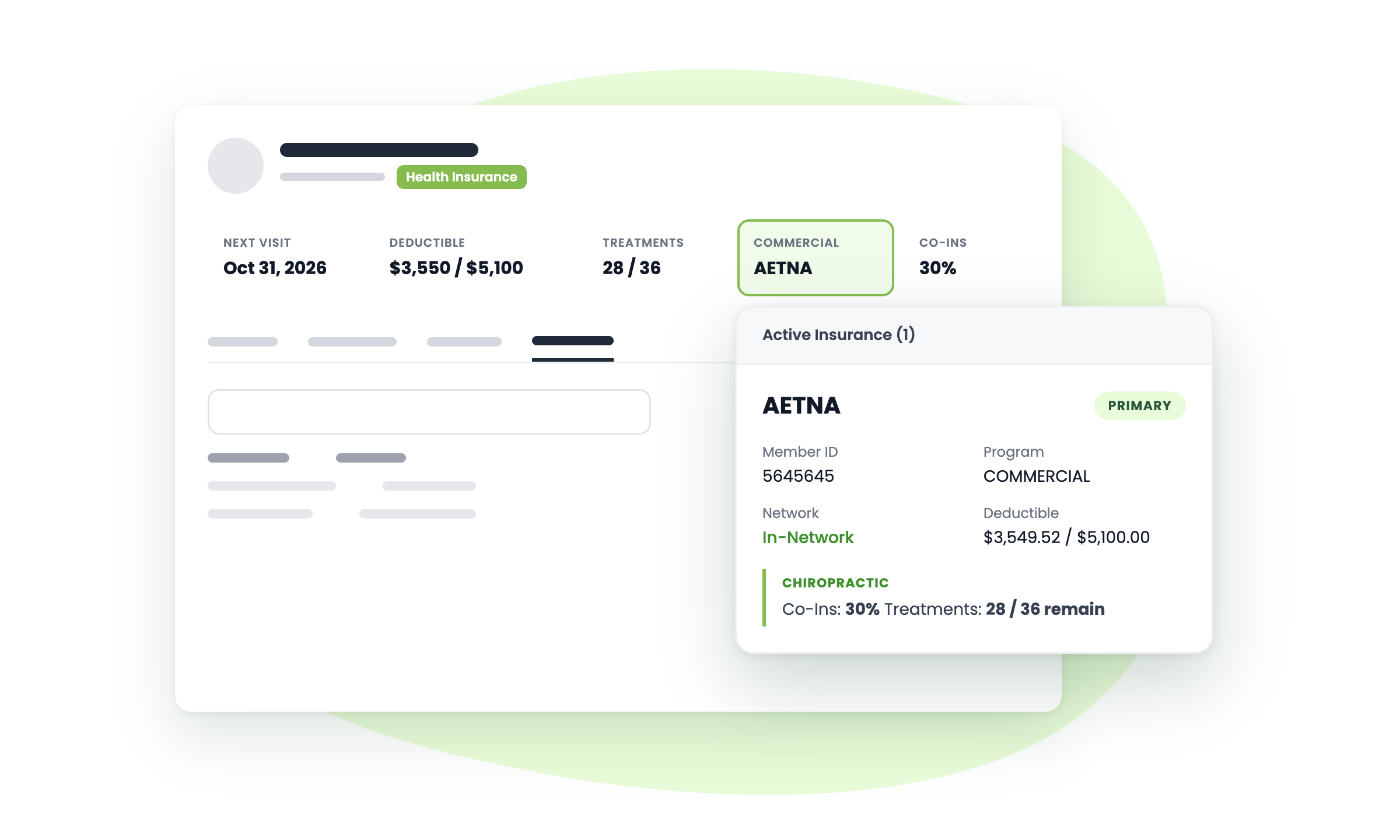
One of the biggest lessons we've learned about chiropractic insurance authorization and eligibility verification is surprisingly simple: Getting insurance data isn't the hard part. Making that data usable is.
Traditional insurance eligibility systems can return pages of information, multiple deductibles, dozens of benefit categories, and 15 different tabs for staff to navigate. That's technically electronic insurance verification, but it isn't much of an automation if an employee still needs five minutes and a decoder ring to determine the patient's actual chiropractic benefits.
The better workflow is: Eligibility → Relevant chiropractic benefits → Financial policy → Patient communication
That's why ChiroUp partners with TriZetto to bring real-time insurance verification directly into the chiropractic workflow. The goal is to verify coverage for every patient and visit while identifying the information that matters most to the practice and the patient, including the patient's deductible, copay, and coinsurance responsibility.
Instead of staff repeatedly navigating payer portals or interpreting complicated eligibility responses, relevant benefit information can become part of the normal EHR workflow. That information can then help the practice establish the appropriate financial policy and communicate the patient's expected financial responsibility before confusion reaches the front desk.
For us, the larger lesson about chiropractic insurance verification and authorization is that automation shouldn't simply retrieve more insurance data. It should turn insurance data into an answer that the chiropractic practice and patient can actually use.
Sometimes, one simple automation can save five minutes of staff time and fifteen minutes of explaining why a patient owes a bill they didn't expect.
7. Why Payment Processing Should Be Built Into Your Chiropractic EHR
One of the unexpected lessons we've learned about chiropractic payment processing is that accepting a credit card is the least interesting part of integrated payments. Integrated payment processing is expected, not an add-on anymore.
When payment processing is built directly into a chiropractic EHR, patient balances, transactions, financial policies, statements, and payments can be integrated into a single connected workflow. Instead of collecting money in one system and manually entering the transaction into another, the payment can automatically connect back to the patient's account.
And patients shouldn't have to call the front desk just to pay a bill.
ChiroUp EHR offers patients multiple independent payment options. Patients can pay through the free ChiroUp patient portal, while QR codes included on statements can take patients directly to online payment options. The easier it is to pay, the less time staff spend collecting balances, processing cards, and manually entering payments.
We also learned that price matters. Reducing our credit card processing rate from 2.9% to 2.6% helped make integrated chiropractic payment processing more attractive to practices. Greater adoption means more payments remain inside the EHR workflow, reducing duplicate data entry and opportunities for human error.
The larger lesson from our first 3,000 users is that chiropractic payment processing isn't really a payment feature anymore. It's workflow automation.
8. Beyond Appointment Reminders: Chiropractic Patient Communication in One Place
One of the biggest lessons we've learned about chiropractic patient communication is that patients expect much more from their chiropractic office than an appointment reminder.
Yes, patients want a text reminder about their appointment on Tuesday, but they also want to complete their intake information before arriving, communicate with their provider, access prescribed exercises, learn about their condition, review shared information, and pay their bill without calling the front desk.
That's why we started thinking about chiropractic patient communication as a continuous digital conversation, rather than a collection of disconnected messages.
With ChiroUp EHR, practices can bring these interactions together through our patient app and integrated communication tools:
Automated and customizable appointment reminders help reduce forgotten visits.
Digital intake forms allow patients to provide information before they arrive.
Two-way texting allows patients and the chiropractic office to communicate directly.
Home exercise programs and condition information provide patients with important resources outside the clinic.
Patient information and shared clinical resources remain accessible through the app.
Payment messages can remind patients about outstanding balances and make it easier to pay.
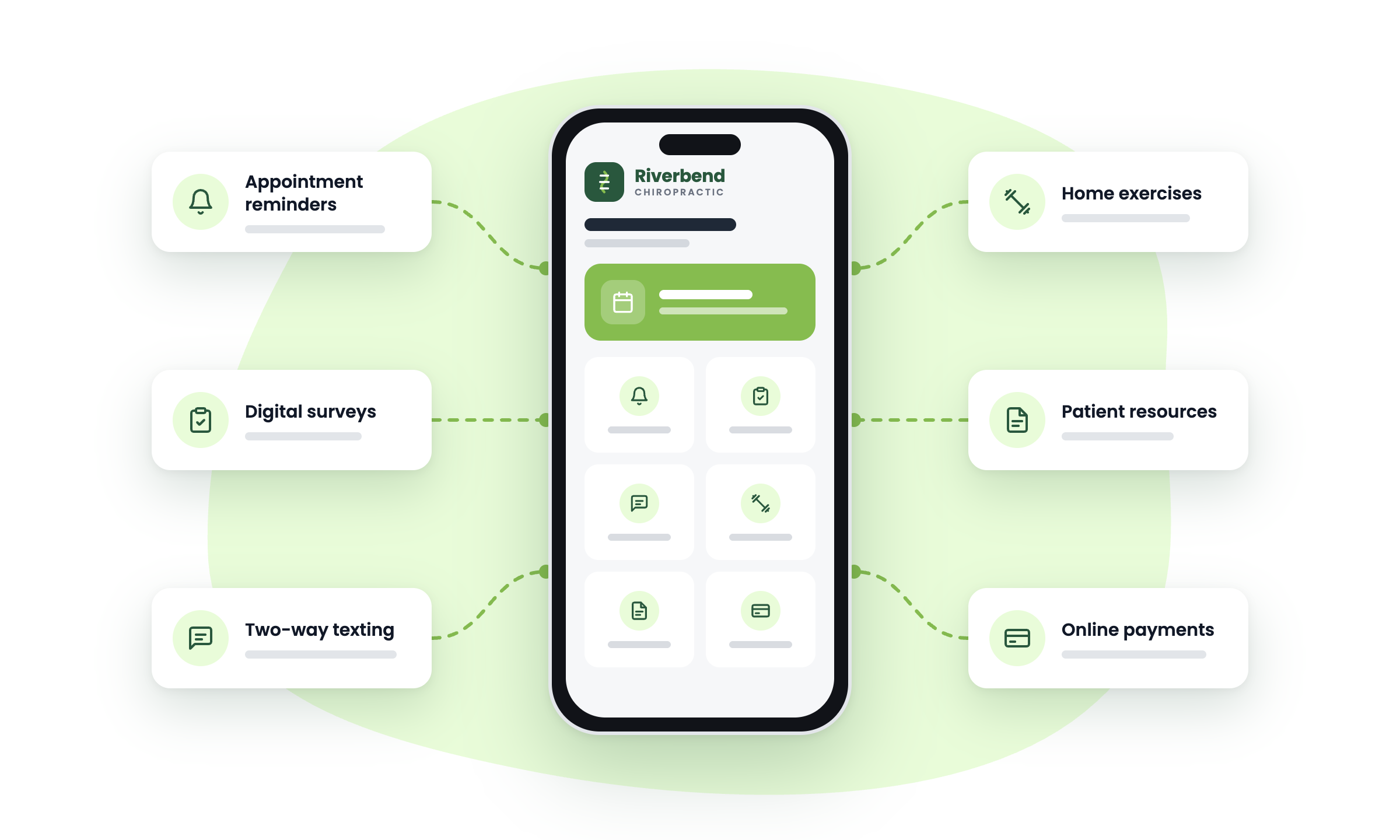
The communication can also be customized around the reason for the message. The larger lesson is that great chiropractic patient communication software isn't about sending more texts. It's about connecting the patient to the practice before, during, and after the visit.
Appointment reminders are only the beginning. The best patient communication keeps the chiropractic office in the patient's pocket.
9. A Passwordless Chiropractic Patient Portal: No Usernames or Passwords to Remember
Here's another lesson from our first 3,000 users: patients hate passwords.
A chiropractic patient portal isn't particularly useful if patients can't remember how to get into it. Forgotten usernames, password resets, locked accounts, and calls to the front desk create friction for patients and are another unnecessary administrative task for staff.
So we asked a different question: Why require patients to remember another password at all?
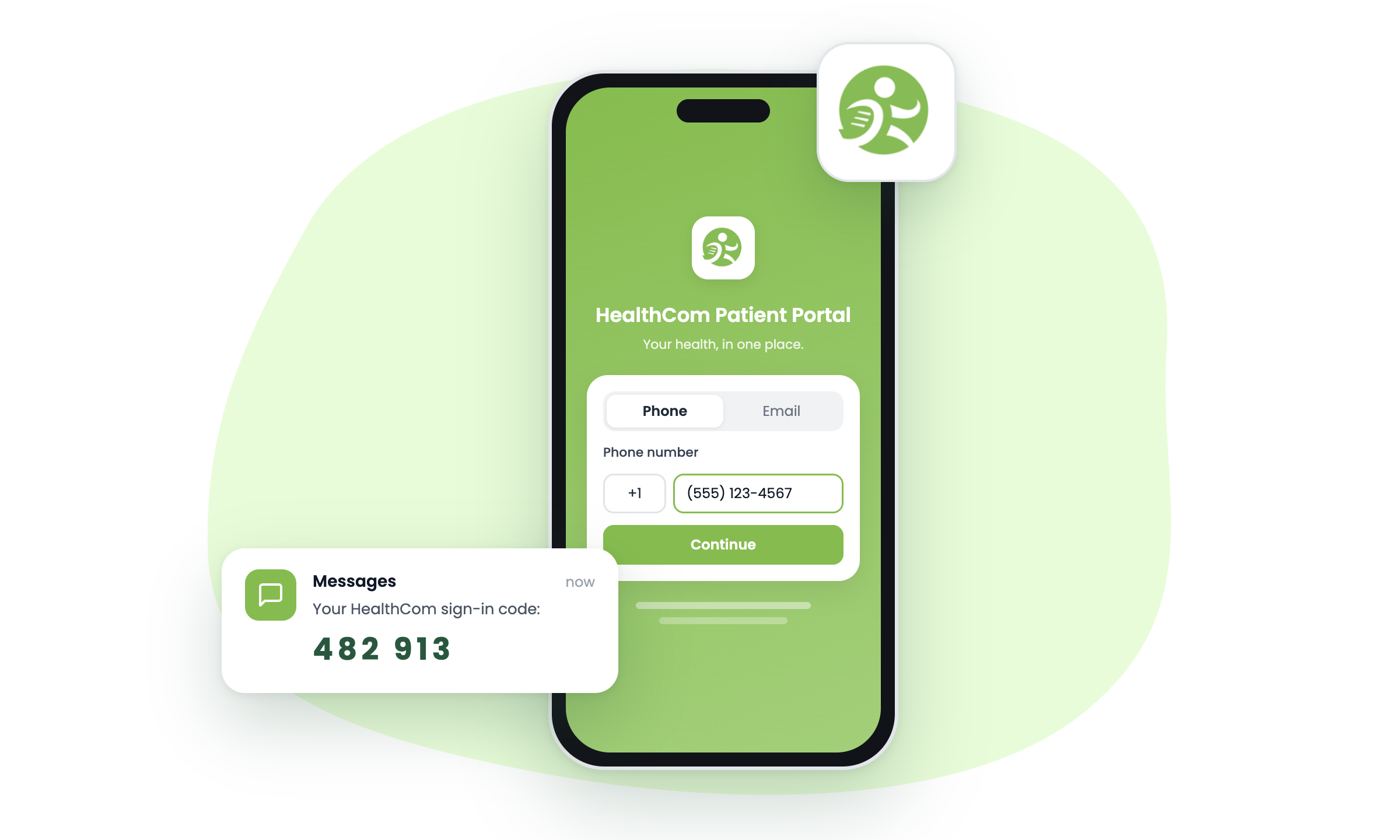
With ChiroUp, patients can access their patient portal using information they already know, their phone number, or their email address. Two-factor authentication verifies their identity and provides immediate access without requiring another password to remember.
If patients can remember their phone number, they can get in.
Once authenticated, patients can access the information and tools your practice makes available through the portal, without calling the office because they forgot a password.
10. Why an All-in-One Chiropractic EHR Can Replace Your Patchwork of Software
Most additional features in ChiroUp EHR are included at no additional cost. We don't believe every new feature should become another line item on your software bill. In fact, all the functionality we have doesn't come at an additional cost unless it incurs costs. Those features require usage-based billing.
Think about the number of separate technologies a modern chiropractic practice may need:
Every additional system means another vendor, another login, another integration, another bill, and another potential point of failure.
That's technology debt, and reducing it has become one of our larger goals. The future of the chiropractic EHR shouldn't be adding more software to your practice. It should make more of that software unnecessary.
For ChiroUp users, the goal is a more connected chiropractic practice management experience, where information flows across clinical care, administrative tasks, billing, and patient communication rather than being repeatedly entered into separate systems.
What 3,000+ Users Taught Us About the Future of Chiropractic EHR Software
The lesson from our first 3,000 users is clear: your chiropractic EHR should eliminate work, not create more. Documentation, AI, insurance verification, payments, patient communication, intake, and clinical workflows shouldn't require a patchwork of software, repetitive data entry, and a collection of passwords.
The best all-in-one chiropractic EHR should quietly connect these pieces in the background so your team spends less time managing technology and more time caring for patients. If your current software isn't actively giving you time back, it's probably time to expect more from your EHR.
That's what we're continuing to build with ChiroUp EHR: chiropractic software shaped by real chiropractors, real practice workflows, and feedback from thousands of users. And as our users continue to challenge us, we'll continue listening, improving, and finding new ways to make running a chiropractic practice easier.
Want to see how ChiroUp EHR can simplify your chiropractic documentation, billing, patient communication, and practice management? Explore ChiroUp EHR and discover what an all-in-one chiropractic platform can do for your practice.