
New chiropractic research is published every week, making it difficult for busy clinicians to separate meaningful findings from noise. To help, our team has reviewed the most clinically relevant chiropractic and musculoskeletal studies published during the first half of 2026 and summarized the research most likely to impact patient care.
What does the latest research mean for the practicing chiropractor? Quite a bit. From major guideline endorsements of spinal manipulation for low back pain to new evidence on cervical radiculopathy, headaches, opioid reduction, plantar fasciitis, and even brain-based effects of SMT, the first half of 2026 delivered several studies with immediate clinical relevance.
In This Review
SMT Remains the Most Endorsed Treatment for LBP
Conservative Care Rivals Surgery for Cervical Radiculopathy
Chiropractic Care Reduces Opioid Use
Lumbar SMT is Safe
Soft Tissue Therapy for Plantar Fasciitis
Top Tests for Cervical Radiculopathy
Cervicogenic Headache Treatment Effectiveness
SMT Modulates the Brain
Joint & Neural Mobilization for Tennis Elbow
Thoracic Manipulation for Neck Pain
Bonus: Exercise Snacks Relieve MSK Pain
1. SMT Remains the Most Endorsed Treatment for LBP
A June 2026 comprehensive review of clinical practice guidelines published in The Lancet Rheumatology highlights spinal manipulation as a leading non-pharmacological approach for low back pain.
“[Acute LBP] Treatments with recommendations in most guidelines were self-management [59%], heat therapy [65%], spinal manipulation [71%], and exercise [41%].” (1)
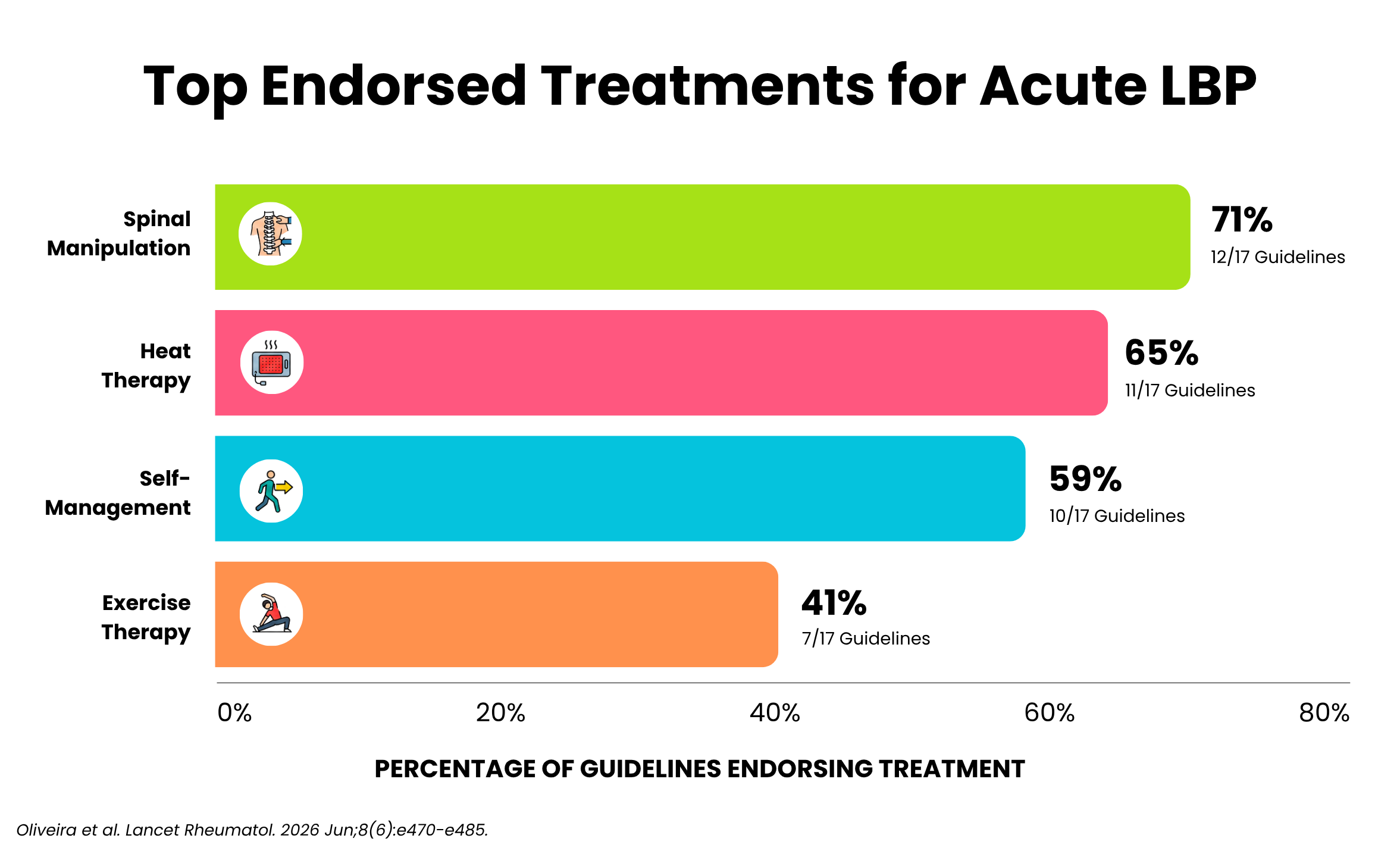
Additionally, the same Lancet review found that nine clinical practice guidelines recommended spinal manipulation for chronic low back pain.
Oliveira CB, et al. Lancet Rheumatol. 2026 Jun Link
These findings are reinforced by a recent Cochrane review of 76 RCTs, demonstrating that spinal manipulative therapy improves both pain and function in patients with chronic low back pain. (2)
de Zoete A, et al. Cochrane Database Syst Rev. 2026 Jan. Link
A recent JBJS Review article for spine surgeons reinforced spinal manipulation therapy as an evidence-based conservative option across the spectrum of low back pain.
"Evidence supports spinal manipulation therapy (SMT) as a conservative option for acute, subacute, and chronic LBP, especially when used as part of multimodal care." (3)
Basques BA, et al. JBJS Rev. 2025 Dec 16 Link
2. Conservative Care Rivals Surgery for Cervical Radiculopathy
A systematic review of more than 1,100 patients found no significant long-term differences between surgery and conservative care for arm pain, neck pain, disability, or overall treatment success in patients with cervical radiculopathy.
“Evidence from this pooled analysis suggests long-term pain, disability, and functional outcomes are comparable between [cervical radiculopathy] patients selected for non-operative management and those selected for surgery…. Surgery was not associated with superior outcomes in VAS for arm pain, VAS for neck pain, or NDI after 12 months of treatment, nor in overall success.” (4) Kale KM, et al. Spine. 2026:10-97. Link
Deeper Dive: There is a vast difference between treating a condition and delivering best-practice care. ChiroUp subscribers gain access to more than 200 best-practice protocols featuring the latest assessments, treatments, exercises, and video-guided clinical tutorials designed to support confident, evidence-informed management.

3. Chiropractic Care Reduces Opioid Use
Mounting evidence confirms that chiropractic care may play an important role in reducing opioid exposure among patients with spine-related pain.
“...compared with standard medical care alone, receipt of chiropractic care may reduce the odds of receiving prescription opioids by 64%. [And] … earlier receipt of chiropractic services (within the first 30 days of presenting with spine-related pain) is associated with a greater decrease in the odds of receiving prescription opioids.” (5)
Emary PC, et al. Pain Rep. 2025 Dec 12 Link
These findings follow a 2025 study of more than 216 million patient records, which found that patients receiving chiropractic spinal manipulation were significantly less likely to receive opioid prescriptions and experienced a 71% lower risk of opioid-related adverse drug events. (6)
Trager RJ, et al. Health Sci Rep. 2025 Sep 19 Link
Deeper Dive: Help educate patients, referral partners, employers, and healthcare decision-makers by sharing our Opioid Infographic, which highlights the growing evidence supporting chiropractic care as a safer, evidence-based option for MSK pain management.

4. Lumbar SMT Does Not Increase Cauda Equina Risk
In a matched-cohort study of nearly 70,000 patients with lumbar disc herniation, stenosis, or radiculopathy, spinal manipulative therapy was not associated with an increased risk of cauda equina syndrome compared with physical therapist-led exercise.
"Among adults with lumbar disc herniation, stenosis, and/or radiculopathy, we did not identify an association between spinal manipulative therapy and an increased risk of cauda equina syndrome." (7)
Trager RJ, et al. PM&R. 2026, Jan. Link
5. STM is Beneficial for Plantar Fasciitis
A JMMT systematic review confirmed that managing chronic plantar fasciitis often requires more than adjustments and stretching:
“[Soft Tissue Manual Therapy] particularly when combined with conventional therapy (e.g. stretching, strengthening exercises or therapeutic modalities) was associated with greater improvements in pain, ankle range of motion, pressure pain threshold and foot-related functional outcomes compared with conventional therapy alone. Instrument-assisted soft tissue mobilization (IASTM) and myofascial release therapy were associated with consistent improvements in foot function and pain relief.” (17)
Jawade SS, et al. J Man Manip Ther. 2026 Mar 30 Link
Deeper Dive: Check out this Plantar Fasciitis Playbook on-demand webinar, which walks through practical examination strategies, clinical pearls, and multimodal management techniques designed to improve outcomes for patients with heel pain.

6. Top Tests for Cervical Radiculopathy
An updated systematic review identified the most useful physical exams for cervical radiculopathy.
“Clinicians may use the outcome of Spurling's test and the outcome of the combination of ULNTs to assist their clinical reasoning in diagnosing [cervical radiculopathy].” (10)
Note: Among the tests evaluated, Spurling's test demonstrated consistently high specificity (0.84-1.00). Pooled upper limb neurodynamic tests demonstrated excellent sensitivity (0.97).
Thoomes EJ, et al. BMC Musculoskelet Disord. 2026 Feb 13 Link
Deeper Dive: ChiroUp subscribers can access step-by-step video tutorials for Spurling's Test and all Upper Limb Tension Tests within the Clinical Skills > Clinical Evaluations section, making it easy to refine examination skills and apply these evidence-based assessments with confidence.
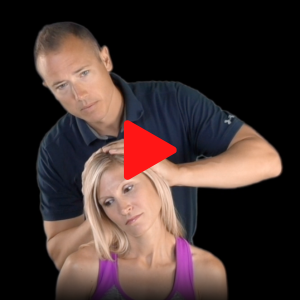
Spurling's Test
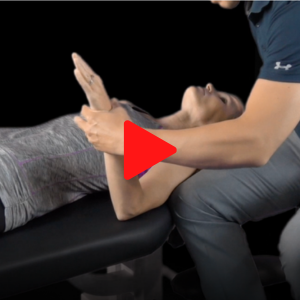
Upper Limb Tension Test 1 (Median nerve)
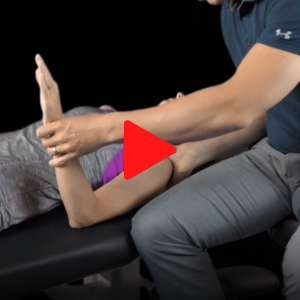
Upper Limb Tension Test 2 (Radial nerve)
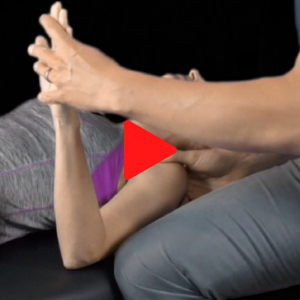
Upper Limb Tension Test 3
(Ulnar nerve)
7. Top Cervicogenic Headache Treatments
A systematic review published in the Journal of Clinical Medicine identified effective treatment options for patients with cervicogenic headache.
"Dry needling techniques and manipulations have shown significant effects on parameters related to pain, sensitivity, functionality, and general health in patients with headaches." (11) Maroto-García R, et al. Journal of Clinical Medicine. 2026 Mar 9 Link
A separate review published in Archives of Physical Medicine and Rehabilitation reached a similar conclusion.
"Manual therapy may offer short-term relief for adults with cervicogenic headaches." (12)
Martins L, et al. Annals of Physical and Rehabilitation Medicine. 2026 May 1. Link
While manual therapy remains a primary treatment for cervicogenic headache, a recent study in the Journal of Manual & Manipulative Therapy reinforces the importance of a multimodal approach.
"...altered cervical Cobb angle, poor sleep quality, and psychological status may serve as potential predictors of cervicogenic headache in patients with chronic neck pain. These findings highlight the importance of a comprehensive approach to managing cervicogenic headache and neck pain." (13)
Alshana ON, et al. Journal of Manual & Manipulative Therapy. 2025 Sep 3 Link
Deeper Dive: Looking for practical guidance on multi-modal headache management? Watch our on-demand webinar on the assessment and treatment of cervicogenic and migraine headaches.
ChiroUp subscribers can also download the Differentiating & Managing Headaches clinical infographic from the Forms Library as a quick reference resource that supports confident diagnosis and evidence-based care.


8. SMT Modulates the Prefrontal Cortex
While spinal manipulation is often viewed through a biomechanical lens, a growing body of research suggests its effects reach far beyond the spine:
"Preliminary findings indicate that spinal manipulation-related therapies may alleviate lumbar disc herniation associated chronic low back pain and mood disorders by modulating regions such as the prefrontal cortex, the visual network, and the default mode network.
The ten included studies demonstrated that spinal manipulation therapies induce significant changes in brain activity and connectivity. Key findings include modulation of the prefrontal cortex, visual network, and default mode network. These neuroplastic changes were correlated with improvements in clinical pain intensity (VAS), functional disability (ODI, JOA), and emotional states (SAS, SDS)." (16)
Cao L, et al. Frontiers in Neurology. 2026 Jan. Link
9. Joint and Nerve Mobilizations Relieve Lateral Epicondylopathy
New research confirms that joint and neural mobilization strategies provide meaningful clinical benefits.
“Maitland, Mulligan, and neural mobilization approaches are effective in reducing pain and enhancing upper limb function in patients with tennis elbow. Neural mobilization may provide numerically greater therapeutic benefits.” (14)
Hegazy MM, et al. Journal of Back and Musculoskeletal Rehabilitation. 2025 Dec 29. Link
Deeper Dive- A 2025 study found that radial tunnel syndrome frequently coexists with treatment-resistant lateral epicondylopathy and can closely mimic it, yet requires a different clinical emphasis. (15) Explore our Radial Tunnel Syndrome vs. Tennis Elbow blog for key clinical distinctions, assessment strategies, and management considerations.
Here’s a concise chart outlining the differences between tennis elbow and radial tunnel syndrome.
10. Thoracic Spine Manipulation Helps Neck Pain
A meta-analysis of 17 randomized controlled trials involving 1,100 patients found that thoracic spine manipulation provides immediate improvements in neck pain.
"Current evidence, ranging from moderate to strong levels, indicates that thoracic spine manipulation yields substantial immediate benefits for individuals experiencing cervical discomfort, including pain relief, improved neck mobility, and reduced functional limitations. The intervention demonstrates excellent safety profiles, making it suitable for widespread clinical application." (8)
Pan Y, et al. Frontiers in Medicine. 2026 Mar 31 Link
These findings are reinforced by a 2025 systematic review of 26 studies for upper quadrant musculoskeletal disorders:
“...HVLAT manipulation is more effective than sham, thoracic mobilization, general conservative therapy or deep neck flexor training on pain and disability in patients with neck pain, cervical radiculopathy, cervicogenic headache, and temporomandibular disorders.” (9)
Thoomes EJ, et al. J Manipulative Physiol Ther. 2025 Jan-Jun;48(1-5) Link
Bonus: Exercise Snacks Relieve MSK Pain
BMC Public Health:
"Four studies demonstrated that exercise snacks significantly alleviated musculoskeletal discomfort compared to prolonged sitting or passive rest. Interventions incorporating targeted muscle stretching, strengthening, or moderate-intensity activities (e.g., stair climbing) demonstrated superior efficacy compared to low-intensity walking or passive controls." (18)
Zeng J, et al. BMC Public Health. 2026 May 2. Link
Deeper Dive: Outcomes improve when patients are empowered with clear education and targeted, actionable exercises. The easier those recommendations are to understand and implement, the more likely patients are to follow through.
Providers benefit from the same simplicity. Check out this brief demo to see how ChiroUp helps you prescribe personalized condition reports and exercises in as few as four clicks, making evidence-based patient engagement fast and effortless.
See how ChiroUp turns today's evidence into ready-to-use assessments, treatments, exercises, and patient education.
Conclusion
The research published during the first half of 2026 continues to reinforce a consistent message: evidence-based conservative care remains a front-line solution for many of the most common musculoskeletal conditions. From low back pain and cervical radiculopathy to headaches, plantar fasciitis, and tennis elbow, chiropractors are uniquely positioned to deliver treatments supported by current evidence while helping patients avoid unnecessary medications and invasive procedures.
As the evidence evolves, staying current becomes increasingly important. We hope these studies help you refine your clinical toolbox and strengthen conversations with patients, referral sources, and healthcare decision-makers.
-
1. Oliveira CB, Koes BW, Pinto RZ, Traeger AC, Machado GC, Lin CC, Hayden JA, Hartvigsen J, Jones CMP, Chen Q, Chiarotto A, Maher CG. Towards global clinical practice guidelines for the management of non-specific low back pain in primary care: a review of current guideline recommendations and how they have changed over the last 30 years. Lancet Rheumatol. 2026 Jun;8(6):e470-e485. Link
2. de Zoete A, Innocenti T, Petrozzi MJ, van Middelkoop M, Assendelft WJJ, de Boer MR, et al. Spinal manipulative therapy for adults with chronic low back pain. Cochrane Database Syst Rev. 2026;1:CD008112 Link
3. Basques BA, Ma S, Sadh P, Daniels AH, Perez-Albela A. Chiropractic care and spinal manipulation: evidence, risks, and referral considerations for spine surgeons. JBJS Rev. 2025 Dec 16;13(12). doi:10.2106/JBJS.RVW.25.00196. PMID: 41401259. Link
4. Kale KM, Chai YH, Patel S, Nischal SA, Wilson JR. Non-operative Management is Associated With Similar Long-Term Patient-Reported Outcomes Compared to Surgery for Cervical Radiculopathy: A Systematic Review And Meta-Analysis. Spine. 2026:10-97. Link
5. Emary PC, Corcoran KL, Coleman BC, Brown AL, Ciraco C, DiDonato J, Wang L, Couban RJ, Sud A, Busse JW. Impact of chiropractic care on opioid use for noncancer spine pain: systematic review and meta-analysis. Pain Rep. 2025 Dec 12;11(1):e1374. Link
6. Trager RJ, Cupler ZA, Gliedt JA, Fischer RA, Srinivasan R, Thorfinnson H. Association Between Spinal Manipulative Therapy for Low Back Pain With or Without Sciatica and Opioid Use Disorder: A Retrospective Cohort Study. Health Sci Rep. 2025 Sep 19;8(9):e71267. Link
7. Trager RJ, Baumann AN, Perfecto RP, Goertz CM. Chiropractic spinal manipulative therapy versus physical therapist‐led exercise and the risk of cauda equina syndrome in adults with lumbar disc herniation, stenosis, or radiculopathy. PM&R. Link
8. Pan Y, Chen J, Liu Y, Chen Z, Liu J. The immediate effects of thoracic spine manipulation in patients with neck pain: a meta-analysis of randomized controlled trials. Frontiers in Medicine. 2026 Mar 31;13:1790614. Link
9. Thoomes EJ, Tilborghs G, Heneghan NR, Falla D, De Graaf M. Effectiveness of Thoracic Spine Manipulation for Upper Quadrant Musculoskeletal Disorders: A Systematic Review. J Manipulative Physiol Ther. 2025 Jan-Jun;48(1-5):422-434. Link
10. Thoomes EJ, Arvanitidis M, van Geest S, van der Windt DA, Verhagen AP, de Graaf M, Kuijper B, Scholten-Peeters GGM, Vleggeert-Lankamp CL, Falla D. Diagnostic accuracy of physical examination tests for painful cervical radiculopathy: update of a systematic review and meta-analysis. BMC Musculoskelet Disord. 2026 Feb 13;27(1):338. Link
11. Maroto-García R, Sánchez-Fernández S, Monclús-Díez G, Sánchez-Jorge S, López-Redondo M, Kołacz M, Kosson D, Valera-Calero JA. Effects of Spinal Manipulation and Dry Needling on Headache and Migraine: A Systematic Review of Randomized Controlled Trials. Journal of Clinical Medicine. 2026 Mar 9;15(5):2084. Link
12. Martins L, Collet P, Lafrance S, Demont A. Efficacy of nonsurgical interventions for the management of adults with cervicogenic headache: a systematic review and meta-analyses. Annals of Physical and Rehabilitation Medicine. 2026 May 1;69(4):102070. Link
13. Alshana ON, Aldabbas MM, Qaradaya AE, Tanwar T, Taha H, Matar M. Predictors of cervicogenic headache in patients with chronic neck pain: a prospective study of 6-month follow-up. Journal of Manual & Manipulative Therapy. 2025 Sep 3:1-0. Link
14. Hegazy MM, Alrawaili SM, Ahmed AS, Rizk FM. Comparative effects of neural mobilization, mulligan, and maitland mobilization techniques in patients with tennis elbow: A randomized clinical trial. Journal of Back and Musculoskeletal Rehabilitation. 2025 Dec 29:10538127261446414. Link
15. Keles A, Palamar D, Gunduz A, Akarirmak U. Ultrasonographic and Electrophysiologic Assessment of Radial Tunnel Syndrome in Patients with Treatment-Resistant Lateral Epicondylitis: Insights into Diagnostic Utility and Clinical Implications. American Journal of Physical Medicine & Rehabilitation. 2025 May 12:10-97. Link
16. Cao L, Shu J, Li B. Brain functional changes following spinal manipulation therapy in patients with lumbar disc herniation and chronic low back pain: a scoping review. Frontiers in Neurology. 2025;16:1712320. Link
17. Jawade SS, Jawade SA, Bankar N, Vardhan V. Effectiveness of soft tissue manual therapy in managing chronic plantar fasciitis: a systematic review. J Man Manip Ther. 2026 Mar 30:1-8. Link
18. Zeng J, Lei D, Gao M, Li Y, Aslam S, Zhang W. Can exercise snacks alleviate musculoskeletal discomfort in prolonged sitting? A systematic review of randomized controlled trials. BMC Public Health. 2026 May 2. Link