
The Friction Audit Every Chiropractic Office Should Perform
I recently had the opportunity to host a 1-Day workshop on “The Patient Experience” in London, England. Every chiropractic office thinks its patient experience is pretty good. Then a real patient walks through it—website to phone call to paperwork to parking lot—and you find six places where the experience quietly falls apart.

That's friction. It's rarely one big broken thing. It's a dozen small ones, and most doctors never see them because they never walk their own patient journey from the outside. Try it yourself: pull up your website on your phone right now, on data instead of wifi, and try to book an appointment as if you've never heard of your own practice. Most doctors get frustrated before they even reach the calendar.
Patient experience isn't just clinical outcomes. It's clinical outcomes, service, and hospitality, working together. If any one of the three is weak, patients feel it, even when they can't name it. They just know something felt off, and "something felt off" is how you lose a patient who was never unhappy with your adjustment. Or, maybe you don’t lose that patient, but they don’t feel compelled to refer friends and family to your office. The silent killer of a practice.
The numbers back this up. Customer retention research by Joey Coleman shows that roughly 20% of new customers leave before making a second purchase, and most of that churn occurs in the first 100 days of the relationship. In a chiropractic practice, that's not a marketing problem. That's a friction problem. You spent money and effort getting that person through the door. Losing them to a clunky booking process or a confusing report of findings is the most expensive mistake in the building because acquiring a new patient costs 5 to 25 times more than keeping the one you already have.
The fix isn't a total overhaul. It's an audit, touchpoint by touchpoint, followed by a habit: fix one friction point a week. Here's how to run it.
1. Optimize Your Website
Your website is the first touchpoint, and most doctors haven't looked at it as a patient in years.
Can someone book an appointment in under 60 seconds from their phone? Is your number one tap away, not buried three clicks deep in a menu? Does the site tell a new patient what to expect, or does it mostly talk about your credentials?
A confused prospect doesn't call to ask questions. They close the tab and call the next practice on the list.
This is also the first place patients form an opinion about your hospitality, long before they ever meet your staff—a cluttered, outdated site quietly tells them the in-office experience might be cluttered and outdated too.
2. Simplify Appointment Booking
This is where most practices bleed patients without ever realizing it.
Is online scheduling available, or does someone have to call during business hours and hope for a live voice? When they do call, are phones answered, and is there a quick call-back policy for the ones you miss? Can you get a new patient in within 48 hours? Every day past that window is a day they might book somewhere else instead.
And don't forget social media. If someone sends your practice a DM and waits three days for a reply, that's friction too, even if it's invisible to you. Each is a fork in the road where an interested prospect either becomes a scheduled patient or quietly moves on to the next practice on their list.
3. Streamline New Patient Paperwork
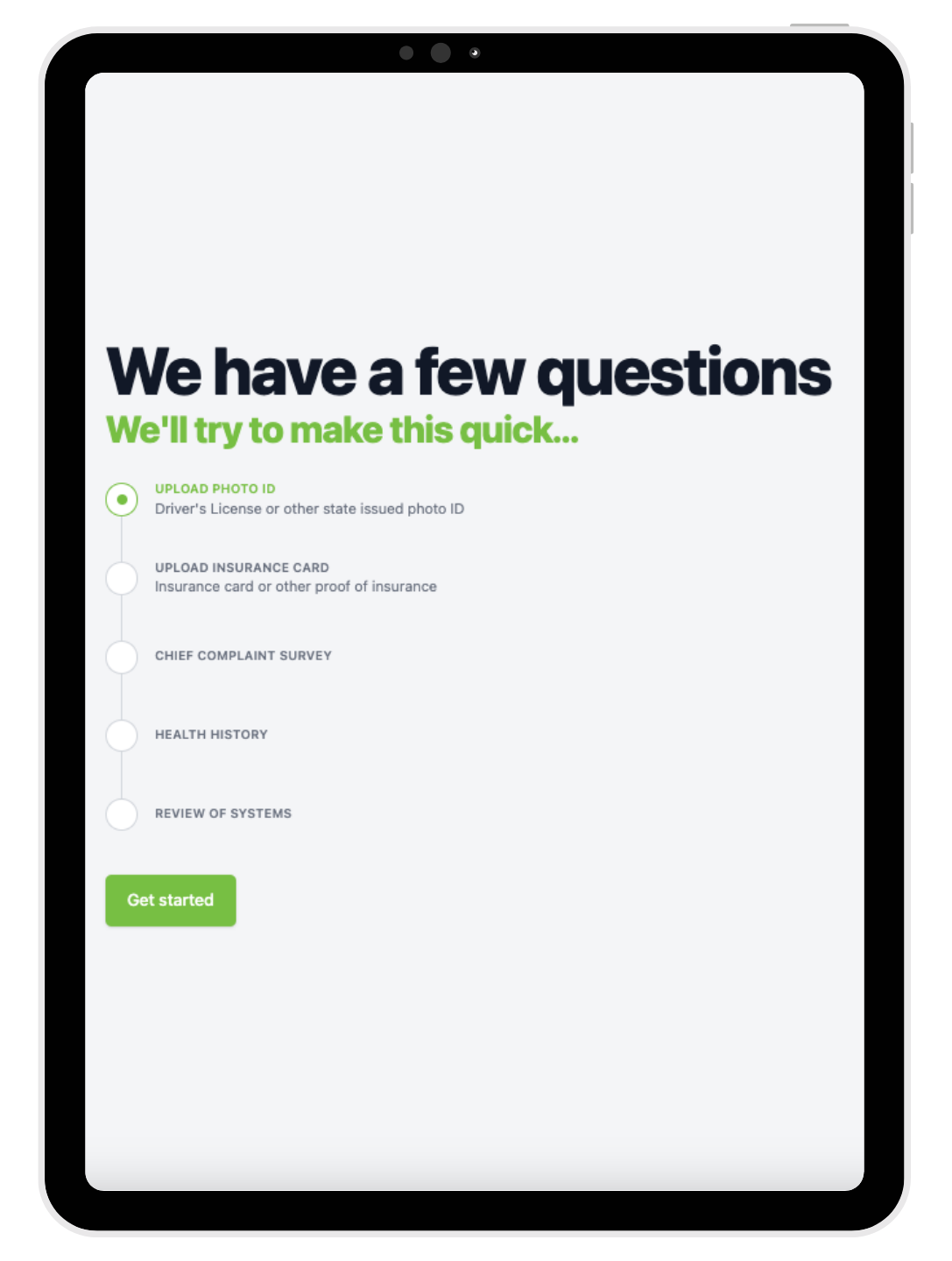
Paperwork is where good first impressions go to die. Offer it online before they arrive, or have it ready and simple on arrival, not a clipboard with twelve pages of fine print.
Verify insurance before the visit, not during it, so nobody is surprised at the front desk. If your patient population includes non-English speakers, have a plan in place before they're standing in front of you.
And if the visit involves a lower-extremity exam, remind them what to wear in advance. It's a small detail, and it's a huge relief when they're not caught off guard. None of this is glamorous work, but it's the difference between a patient who walks in feeling anticipated and one who walks in feeling processed.
ChiroUp helps practices create a smoother start with digital paperwork sent before the visit, less duplicate data entry, and an intuitive intake process that feels more like a conversation than a stack of forms.
4. Improve the First Visit
Short wait times aren't a nice-to-have. They're the fastest way to build or destroy trust in the first ten minutes a new patient spends in your office.
Set a wait-time protocol and hold your team to it. Consider a new patient tour of the office and services you are proud of before they are brought into the exam room. This is also where hospitality stops being a buzzword and becomes real: how someone is greeted, how long they wait, whether anyone acknowledges they're a little nervous.
Want to elevate your waiting room experience? Watch this video for simple ways to optimize your waiting room experience, from creating a clean, welcoming environment to incorporating patient-focused touches that leave a lasting impression.
5. Strengthen Your Report of Findings
This is where clinical outcomes and communication meet, and it's the touchpoint doctors most often assume is fine because they've given the same report a thousand times.
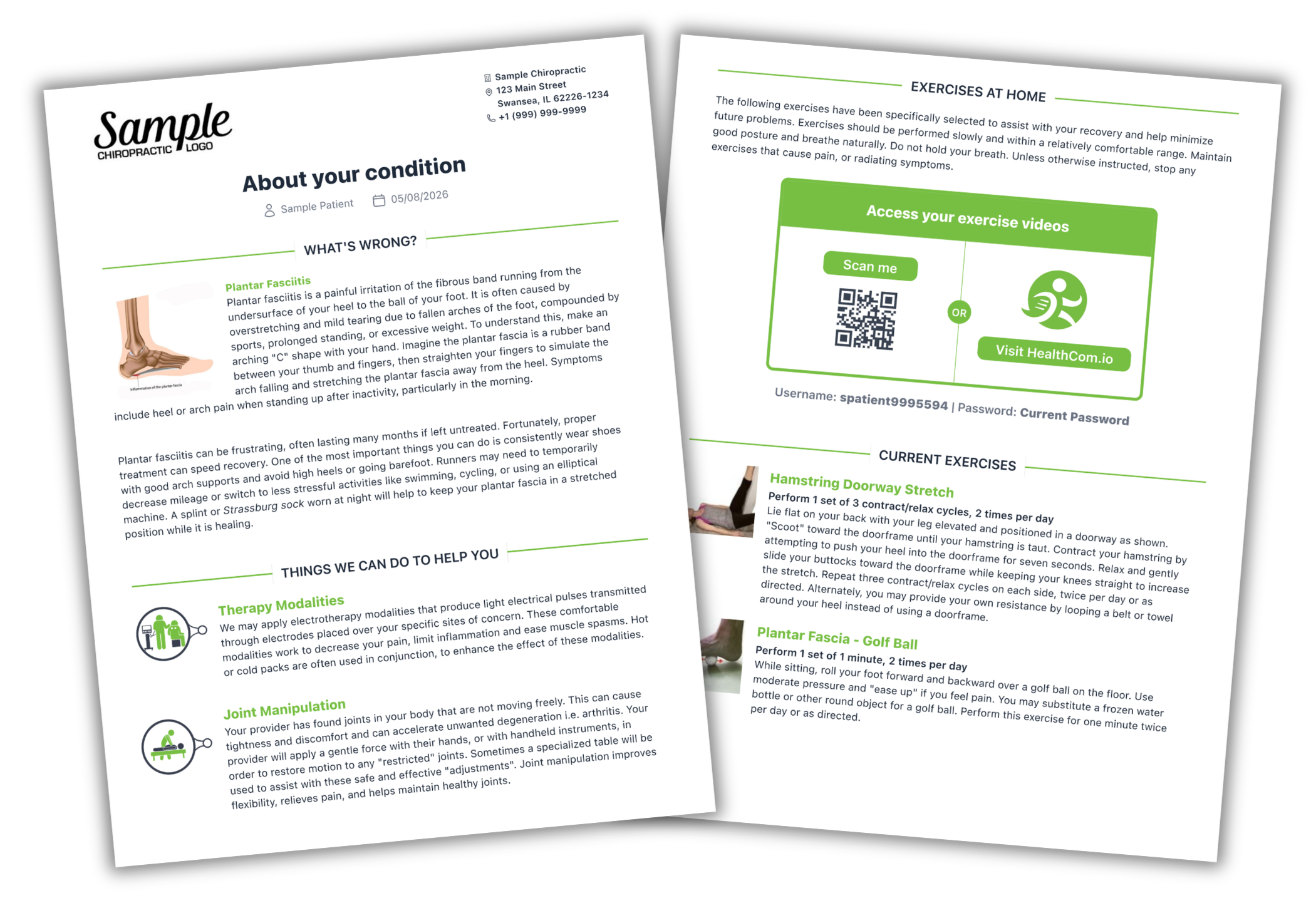
Has the treatment plan been explained clearly, in language the patient actually understands, backed by handouts or a ChiroUp condition report they can take home and reference later? Has it been recommended with confidence, rather than hedged and apologized for?
A patient who leaves confused about why they need 8-12 visits isn't going to show up for visit two, and the friction here isn't clinical; it's communication. This is the moment buyer's remorse either gets addressed or gets left to fester on the drive home.
6. Schedule the Full Treatment Plan
Don't hand someone a treatment plan and then make them rebook, one visit at a time, every single time. Get the entire plan scheduled out in advance.
Pair it with a stored payment method and a patient-tracking system, so nobody quietly falls off your schedule without you noticing. For active patients, two-way texting closes the loop on last-minute changes without a game of phone tag.
7. Simplify Patient Payments
Payment friction shows up as an awkward silence at the front desk. Present package and payment options clearly, before the patient has to ask what things cost. Collect a stored payment method up front so it isn't a conversation at every single visit. The goal is for payment to be the least memorable part of the appointment, not the part they complain about on the drive home.
8. Improve Patient Follow-Up
The relationship doesn't end at discharge, and this is where most practices go quiet.
Active patients need a seamless referral process, digital access to their exercises, and a team that responds quickly when something changes. They shouldn't have to chase you down to ask a question between visits.
Inactive patients need to be offered an appointment within 48 hours of re-engaging, not a week later, once the urgency has faded and they've talked themselves out of coming back.
Everything you built for active patients—the texting, the scheduling, the responsiveness—should still apply on the way back in. A patient who feels forgotten the moment they stop being profitable notices and tells people.
Make It a Team Effort
Don't run this audit alone in your office at 9 p.m.
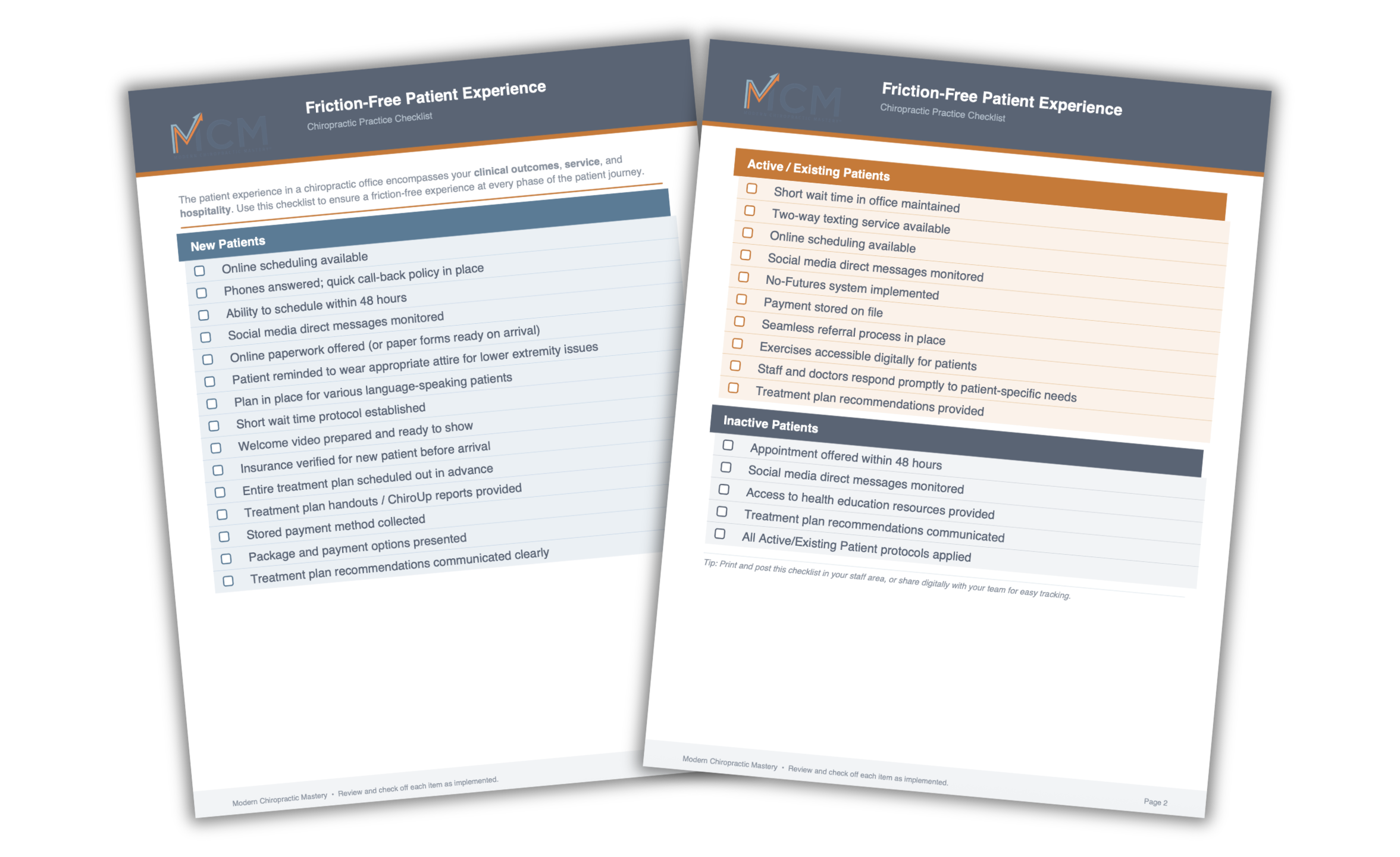
Your front desk sees the booking friction. Your CAs see the paperwork friction. Your associates see the report-of-findings friction. Bring this checklist to your next team meeting and ask each role to flag the one thing that frustrates patients most from their perspective.
You'll get a more honest list in fifteen minutes than you would in a month of guessing on your own, and your team will feel ownership of the fix instead of being handed another directive from the doctor.
Fix One Friction Point Each Week
You don't need to fix all eight touchpoints this month. You need to fix one. Print the checklist, walk your own patient journey as if you were a stranger, and be honest about where it breaks down. Pick whichever touchpoint made you wince while reading this, get your team in a room, and eliminate that single friction point this week.
Next week, pick another. Eight weeks from now, you'll have audited your entire patient journey without shutting the practice down to do it, and your team will have a habit of looking for friction instead of getting used to it.
The adjustment brought them in. The experience is what keeps them. Run the audit, fix one friction point at a time, and you'll have a practice built to keep patients—not just treat them.
Want to reduce friction throughout your practice?
ChiroUp's EHR was built around the entire patient journey—from online booking and digital intake to patient education, automated scheduling, insurance verification, payments, recall campaigns, and two-way texting. Explore how an integrated workflow can eliminate many of the friction points discussed in this article.