
Bridging the Associate-Owner Chiropractor Divide: Creating Mutually Beneficial Relationships
The chiropractic profession faces a persistent challenge: a disconnect between associates seeking meaningful opportunities and practice owners struggling to find and retain quality doctors. This divide creates frustration on both sides and limits growth potential. The good news? It doesn’t have to be this way.
Understanding the Disconnect
At its core, the associate-owner divide comes down to misaligned expectations. Owners often hire associates expecting them to generate new patient volume and drive growth, while associates may assume their role is primarily to serve existing patients and focus on clinical care. When expectations aren’t aligned, tension appears almost immediately.
This divide is further compounded by preparation gaps. Many young chiropractors graduate with strong clinical skills but limited business knowledge. They may not fully understand what it takes to build and sustain a profitable practice. Conversely, owners sometimes fail to clearly communicate expectations or provide the mentorship and systems needed for success.
The result? Great opportunities for young chiropractors can seem scarce, and owners struggle to find associates who can make meaningful contributions. Bridging this gap requires honest communication, shared understanding, and intentional planning.

Financial Realities and Career Positioning
A key factor in aligning expectations is an honest conversation about the return on investment for becoming a chiropractor. Young doctors need realistic insight into income potential, practice ownership costs, and the timeline for building a successful career. Chiropractic schools play a crucial role in preparing graduates not just clinically, but also for the business realities they’ll face.
For associates, success goes beyond clinical skill. Thriving associates demonstrate an ownership mindset: they ask questions about patient adherence, marketing effectiveness, and operational efficiency rather than simply showing up to treat patients. Business literacy, curiosity about practice metrics, and initiative are critical differentiators.
For owners, hiring an associate is a financial and operational commitment. Before bringing on additional doctors, a practice needs a solid economic foundation:
Monthly collections: A sustainable practice typically generates $30,000 or more per month (~$360,000 annually).
Profitability model: Following approaches like Profit First, owners should take home roughly 35% in compensation, allocate 10% to profit, and cover all operating expenses and team salaries with the remainder.
Stable team: A core staff and operational systems should already be in place.

Without these elements, hiring an associate can strain the practice financially and operationally, and the divide persists because quality opportunities remain limited.
What Defines a Great Chiropractic Job?
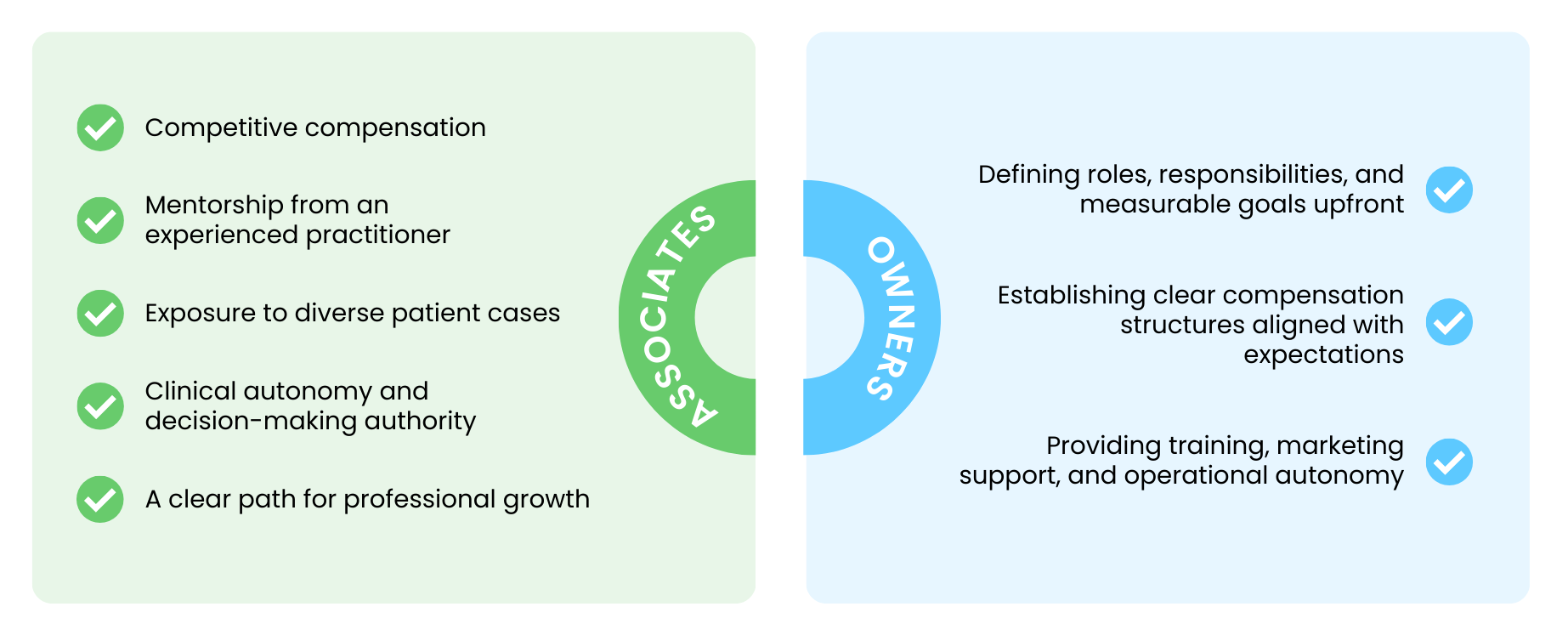
From the associate perspective, a fulfilling chiropractic position includes:
Competitive compensation
Mentorship from an experienced practitioner
Exposure to diverse patient cases
Clinical autonomy and decision-making authority
A clear path for professional growth
Associates value transparency. Practices that openly share financial metrics and involve associates in strategic discussions foster trust and help doctors understand the business, whether they eventually plan to buy in or simply want to contribute meaningfully.
For owners, the focus is on hiring for success, not just filling a schedule gap. A strategic approach involves:
Defining roles, responsibilities, and measurable goals upfront
Establishing clear compensation structures aligned with expectations
Providing training, marketing support, and operational autonomy depending on the associate’s role
Compensation deserves special attention. Complicated or unrealistic bonus structures often lead to frustration. Transparency and simplicity build stronger, longer-lasting relationships.
Building Mutually Beneficial Relationships
Successful associate-owner partnerships share several key characteristics:
Written agreements: Clearly outline compensation, roles, responsibilities, decision-making authority, and any ownership or partnership opportunities. Update these agreements as the relationship evolves.
Regular communication: Schedule consistent check-ins to review practice performance, address concerns, and ensure alignment. Poor communication is the root of most conflicts.
Professional development: Invest in your associates’ growth through continuing education, clinical mentorship, and exposure to practice management decisions. Associates who feel invested are more likely to invest fully in the practice.
Ownership Transition
Many associateships start with vague promises of future ownership. These promises often create tension when expectations don’t match reality. To avoid issues:
Structure ownership options explicitly: Define trial periods, purchase prices or valuation methods, and formal documentation.
Involve advisors: Practice brokers, attorneys, and accountants can help structure transitions properly.
Maintain patient and staff trust: Plan carefully for how the transition affects patients, staff, and operations.
If ownership isn’t an option, be upfront. Many associates thrive in long-term positions as long as expectations are clear and compensation is fair. Miscommunication is what typically leads to dissatisfaction.
The Role of Professional Development
Live events, seminars, and professional development opportunities are often overlooked but play a major role in bridging the divide. They:
Develop clinical and business skills
Create networking opportunities
Expose both associates and owners to best practices from successful practices
Investment in professional development signals commitment to both the associate and the broader profession.
Moving Forward
Bridging the associate-owner divide requires intentional effort from both parties. Associates must approach opportunities with an ownership mindset, seeking to understand practice economics and contribute to growth. Owners must provide clear expectations, proper support systems, and fair compensation structures that align incentives.
The chiropractic profession needs both great jobs for young doctors and great associates for established practices. By addressing the disconnect head-on with honest communication, clear agreements, and mutual investment in success, we can create relationships that benefit everyone—associates, owners, and most importantly, the patients we serve.
The divide isn't insurmountable. With the right approach, associate-owner relationships can become powerful partnerships that elevate the entire profession.